Sustainable living in Portugal
Not just a bottle stopper: Why cork is one of Portugal’s greatest sustainable treasures
... but is cork sustainable? It turns out that one of the world's oldest natural materials is also one of its most remarkable renewable resources...

Many of you, when you think of cork, probably think of wine stoppers. Or, more specifically, you might think about the slight annoyance of opening a bottle sealed with one. But is cork sustainable? It turns out that one of the world’s oldest natural materials is also one of its most remarkable renewable resources.
I only realised this a few years ago while visiting some German friends. One of them held up a bottle with a screw cap and enthusiastically said, “I love these new stoppers. So much faster than having to remove a cork.”
I was genuinely shocked. My heart skipped a beat. I stayed quiet for a moment, trying to process what I had just heard.
For me, opening a bottle of wine has never simply been about accessing the wine. It is about the ritual, the anticipation, and the experience. The cork is an essential part of that process. Fetching the corkscrew. Carefully twisting it into the stopper. Feeling the resistance. Pulling slowly until you hear that unmistakable pop. Then comes the first aroma escaping from the bottle, giving you a preview of what’s to come.
My friend had reduced the entire experience to an inconvenience.
In Portugal, that ritual has been part of everyday life for generations. Even when you can’t find the corkscrew, that’s somehow part of the tradition too. The search through kitchen drawers, the inevitable frustration, and eventually the satisfaction when the bottle is finally open. It’s all part of the story.
Yet cork deserves far more recognition than simply being the material that seals a bottle of wine.
This is a very old campaign with Rob Schneider, but still fun to watch.
Portugal and cork: A landscape shaped by nature
Cork is deeply woven into Portugal’s identity. Drive through the Alentejo or parts of the Algarve and you’ll notice the open woodlands dotted with cork oak trees (Quercus suber). These landscapes, known as montado, are among the most remarkable examples of sustainable land management anywhere in the world.
Unlike intensive forestry or monoculture plantations, a cork oak forest supports an extraordinary level of biodiversity. Birds, mammals, insects, fungi and countless plant species thrive under the scattered canopy. Some endangered species, including the Iberian lynx and the Iberian imperial eagle, depend on these habitats.
These forests also play a crucial role in preventing desertification, protecting soils from erosion and storing significant amounts of carbon, making them an important ally in the fight against climate change.
A Tree that doesn’t need to be cut down
Perhaps the most remarkable thing about cork is how it is harvested.
The bark of the cork oak is carefully removed every nine years by highly skilled workers. The tree itself is never cut down. In fact, removing the bark stimulates the tree to regenerate, producing new cork throughout its lifetime.
A cork oak can live for around 200 years and may be harvested between 15 and 20 times during its life. The first harvest is unsuitable for making wine stoppers, but subsequent harvests produce increasingly high-quality cork.
It is one of the few natural materials that can be harvested repeatedly without destroying the resource itself.
Perhaps that’s why cork has become such a symbol of Portugal.
It teaches patience.
In a world obsessed with speed and instant gratification, cork reminds us that some of life’s finest things simply can’t be rushed.
Is cork sustainable? It’s one of the World’s most sustainable materials
Long before sustainability became a marketing buzzword, cork was already setting the standard.
It is:
- 100% natural.
- Renewable.
- Recyclable.
- Biodegradable.
- Carbon negative throughout much of its production cycle.
- Harvested without harming the tree.
The manufacturing process also generates very little waste. Even the smallest pieces of cork are ground up and transformed into insulation panels, flooring, composites or other products.
Few natural materials are used as efficiently. That’s why cork has quietly become one of the most versatile natural materials on Earth.
Much more than wine stoppers
Although around two-thirds of the value of Portugal’s cork industry still comes from wine closures, cork’s applications extend far beyond the bottle.
Construction and home insulation
Expanded cork insulation is increasingly popular in sustainable architecture. It provides excellent thermal insulation while also reducing noise and regulating humidity.
Unlike many synthetic insulation materials, cork is breathable, durable and completely natural.
It is used in walls, roofs, floors and even as exterior cladding.
Flooring
Cork flooring has become popular in homes because it is warm underfoot, soft to walk on and naturally absorbs sound.
Its flexibility also makes it comfortable for people who spend long periods standing, such as in kitchens.
Furniture and Interior Design
Portuguese designers have embraced cork as both a functional and beautiful material.
Today you can find cork used in chairs, tables, lamps, wall coverings and decorative objects. Its distinctive texture brings warmth to contemporary interiors while remaining environmentally friendly.
Fashion and Accessories
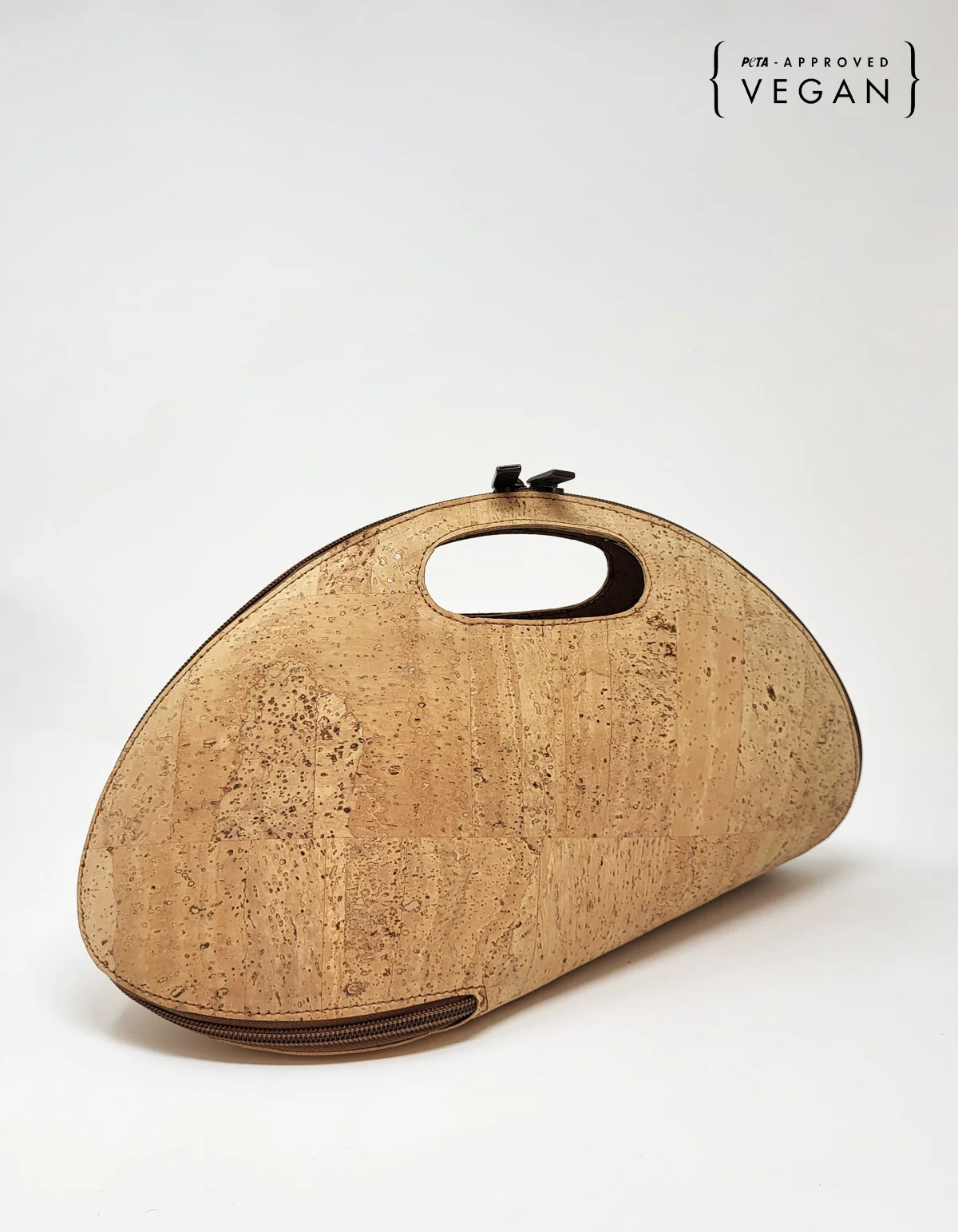
Perhaps one of cork’s most surprising success stories is in fashion.
Portugal has become a global leader in transforming cork into elegant textiles used for handbags, wallets, belts, shoes, backpacks, hats and even jewellery.
Contrary to what many people believe, these products are not carved from solid cork. Instead, thin sheets of natural cork are carefully bonded to a flexible textile backing, creating what is often called cork fabric. The result is a material that is lightweight, soft to the touch, water resistant and remarkably durable.
You’ll often hear it described as cork leather. While the comparison helps people understand its appearance and feel, cork is, of course, something entirely different. It comes from the bark of the cork oak and requires no animal products, making it a popular choice for those looking for natural, plant-based alternatives.
One of the pleasures of living in Portugal is discovering how many local designers have embraced cork as a premium material rather than simply an eco-friendly one. From minimalist handbags to beautifully crafted wallets and travel accessories, Portuguese cork products combine thoughtful design with centuries of craftsmanship.
Unlike many fast-fashion accessories, a well-made cork bag is designed to age gracefully. With a little care, it can accompany you for years, making it not only a sustainable purchase but also a lasting one.
How to spot quality cork products
Not all cork products are created equal.
As cork has become more popular around the world, the market has also been flooded with cheap imitations and low-quality composites. If you’re buying a cork bag, wallet or accessory in Portugal, it’s worth knowing what to look for.
Feel the texture
High-quality cork has a soft, almost velvety feel. It should be flexible rather than stiff, with a pleasant natural warmth. If the material feels plasticky or overly rigid, it’s often a sign that the cork layer is very thin or heavily coated with synthetic finishes.
Look at the grain
Every piece of natural cork is unique.
The surface should display an irregular, organic pattern with subtle variations in colour and texture. Perfectly uniform patterns can indicate printed synthetic materials or cork veneers of lower quality.
Small pores and natural markings are not defects—they’re part of what makes each product unique.
Check the backing material
Most cork fashion accessories aren’t made from solid cork. Instead, a thin layer of cork is bonded to a textile backing that provides strength and flexibility.
Quality manufacturers use durable fabrics such as organic cotton, recycled textiles or certified synthetic fibres designed to last. Poor-quality products often use cheap backings that crack or separate after only a short period of use.
Take a look inside the bag or wallet. Good craftsmanship is usually obvious in the stitching, lining and finishing.
Bend it
One of cork’s greatest qualities is its flexibility.
A quality cork product should bend easily without creasing or cracking. If you gently fold a wallet or strap, it should quickly return to its original shape.
Don’t judge by weight
Many people associate quality with heaviness.
With cork, the opposite is often true.
One of its greatest strengths is being incredibly lightweight while remaining durable. A good cork handbag can weigh significantly less than an equivalent leather one, making it particularly comfortable for everyday use.
Buy Portuguese when possible
Portugal has spent centuries perfecting the art of working with cork.
Buying products designed and manufactured in Portugal not only supports local businesses and artisans, but also gives you access to some of the world’s highest-quality cork craftsmanship.
Many Portuguese brands combine traditional expertise with contemporary design, producing accessories that are elegant, durable and genuinely sustainable.
As with any natural material, quality comes at a price. A well-made cork bag or wallet may cost more than a mass-produced alternative, but it can last for many years with very little maintenance.
Like a good leather bag, it’s something you’ll use rather than replace.
Aerospace
One of cork’s most unexpected applications is in the aerospace industry.
Because it is lightweight, resistant to extreme temperatures and an excellent insulator, cork has been used in spacecraft and rockets, including missions by the European Space Agency.
Sports Equipment
Cork also appears in products many people use without even realising it.
Fishing rod handles, badminton shuttlecocks, cricket balls, baseball cores, yoga blocks and surfboard accessories often incorporate cork because of its combination of lightness, grip and shock absorption.
Portugal: The world leader in cork
Portugal is by far the world’s largest producer of cork, accounting for more than half of global production and an even greater share of the world’s cork products.
The industry supports thousands of jobs, from forestry workers and harvesters to engineers, designers and manufacturers.
More importantly, the economic value of cork gives landowners a strong incentive to preserve cork oak forests instead of replacing them with faster-growing but less biodiverse plantations.
In other words, every genuine cork product purchased helps support an ecosystem that has evolved over centuries.
Why premium wine still chooses cork
Despite the growing popularity of screw caps in some countries, natural cork remains the closure of choice for many of the world’s finest wines.
Part of that is tradition, of course. Wine is one of the few products where ceremony still matters. Opening a bottle shared with friends or family is a moment to savour, and the familiar pop of a cork has become almost inseparable from the experience.
But there are practical reasons too.
Natural cork allows tiny amounts of oxygen to pass through over many years, helping certain wines mature gracefully. For wines intended to be enjoyed after a decade or more in the cellar, that slow interaction with oxygen can be essential to developing complexity.
For everyday wines, screw caps certainly have their place. They are practical, reliable and convenient. Yet for many winemakers, especially in Portugal, France, Italy and Spain, cork remains the gold standard.
In many ways, it reflects the broader philosophy of slow living: taking a little more time because the experience is worth it.
Living with Cork
One of the pleasures of living in Portugal is discovering how naturally cork fits into everyday life.
You’ll start noticing it everywhere.
The menu cover at your favourite neighbourhood restaurant. The coasters in a café. The lamps hanging above a wine bar. The yoga block at your local studio. The laptop sleeve at a design shop. Even the acoustic panels in modern offices are often made from cork.
Many Portuguese homes also make use of cork flooring, particularly in bedrooms and living areas, where its warmth and sound insulation make it particularly comfortable.
Unlike materials that shout for attention, cork quietly improves the spaces around us. It feels warm rather than cold, soft rather than rigid, natural rather than manufactured. You don’t notice cork because it’s fashionable. You notice it because it simply feels right. Natural. Timeless. Effortless.
Perhaps that’s why it fits so well with contemporary Scandinavian-inspired interiors, despite being unmistakably Mediterranean in origin.
Cork: The perfect sustainable souvenir
If you’re looking for something to take home that genuinely represents Portugal, skip the mass-produced trinkets.
Cork products make some of the country’s most thoughtful souvenirs.
You’ll find beautifully crafted notebooks, handbags, wallets, hats, umbrellas, jewellery, coasters, trays, placemats and laptop cases. There are minimalist lamps designed by Portuguese studios, playful toys for children and elegant kitchen accessories that wouldn’t look out of place in a design museum.
Better still, these are souvenirs you’ll actually use.
Unlike many holiday purchases, cork products are practical, durable and timeless. Every time you reach for that wallet or place a hot pan on a cork trivet, you’ll be reminded of Portugal’s landscapes rather than a shelf collecting dust.
Because cork is lightweight, it’s also ideal for travellers trying to avoid excess baggage charges.
Where to discover cork design
Living in Portugal gives you access to a remarkable community of designers who have transformed cork into a contemporary design material.
In Lisbon and Porto, concept stores regularly feature locally designed cork products alongside ceramics, textiles and handcrafted furniture. Design fairs often showcase innovative uses of cork that blur the line between craftsmanship and modern art.
The country’s museums and cultural centres also frequently highlight cork’s role in Portuguese identity, while architecture enthusiasts will notice it appearing in everything from boutique hotels to award-winning contemporary buildings.
It’s one of the rare materials that feels equally at home in a centuries-old wine cellar and a minimalist designer apartment.
More than sustainability
Perhaps what makes cork so special isn’t simply that it’s sustainable.
Many materials can claim to be renewable or recyclable.
Cork goes further. It connects people to a landscape that has evolved over centuries. It supports rural communities, preserves biodiversity, encourages traditional craftsmanship and continues to inspire innovation.
In an age where sustainability is often reduced to labels and certifications, cork tells a richer story. It reminds us that some of the best environmental solutions aren’t new technologies at all. Sometimes they’re traditions that have quietly worked for generations.
Portugal didn’t invent sustainability.
But in cork, it has been practising it for centuries.
A material worth celebrating
For many visitors, cork begins and ends with the wine bottle they open during dinner.
But once you start living in Portugal, you quickly realise it is everywhere. In homes, hotels, restaurants, shops, museums and even cutting-edge architecture.
It is one of those rare materials that manages to combine tradition with innovation, local craftsmanship with global technology, and commercial success with genuine environmental sustainability.
So the next time you hear the familiar pop of a cork leaving a bottle, remember that you’re holding much more than a wine stopper.
You’re holding the bark of a tree that is never felled, the product of one of Europe’s richest ecosystems, and one of Portugal’s greatest contributions to a more sustainable future.
Perhaps that little ritual of opening a bottle isn’t an inconvenience after all.
It’s an invitation to slow down.
To appreciate craftsmanship. To celebrate a remarkable tree. And to remember that some of Portugal’s greatest treasures don’t come from what lies beneath the ground, but from the bark that grows quietly upon it.
Perhaps that’s also what sustainability is really about.
Not only protecting forests or choosing renewable materials, but learning to live a little more slowly. To be present. To enjoy rituals instead of rushing through them. To value quality over convenience, and experiences over efficiency.
After all, a slower life is often a happier one.
And maybe the next time you hear the gentle pop of a cork leaving a bottle, you’ll realise that it isn’t simply opening a bottle of wine.
It’s a small reminder that some of the most sustainable choices are also the most human.