Roupeiro - Sustainable living in Portugal

Alfarroba.Tex: It turns out carob can be worn too

Carob has been feeding Algarve families for generations. Now it’s turning up on boots, handbags and golf clubs.
If you’ve spent any time in the Algarve, you know carob. It’s the pod of the carob tree, a dark, sweet fruit that has long been ground into flour, baked into cakes and used as a stand-in for chocolate. It belongs to the southern Portuguese landscape as much as almond blossoms and whitewashed walls.
What you probably wouldn’t expect is to find it on your feet.
That’s where Alfarroba.Tex comes in: a Portuguese material developed as an alternative to both animal and synthetic leather. After looking at the versatility of cork on Roupeiro.pt, it felt like time to add another unmistakably Portuguese raw material to the list.
We first came across the product through Eco Fashion Portugal, and the concept immediately caught our attention. To better understand where the idea came from, how the material is produced, where it is already being used, and what its limitations are, we spoke directly with Mónica Gonçalves, founder of Alfarroba.Tex.
A fruit from family memory
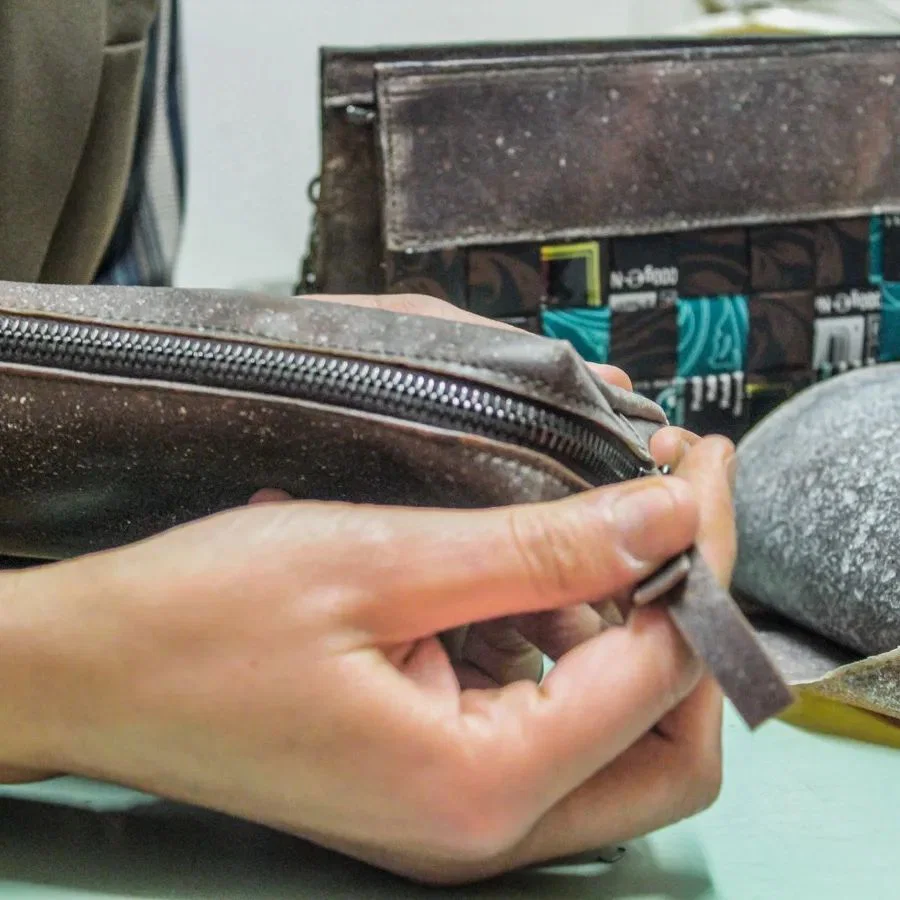
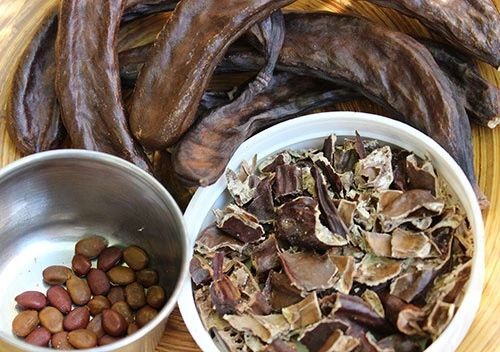
Mónica had spent years researching and developing new materials when she decided to work with something she knew well. The choice of carob was personal:
“I chose carob first because of its importance to me, as my father’s entire family comes from the Algarve, specifically from Algoz.”
It was practical too. Carob is naturally strong, she says, and its scent is extraordinary.
The goal was never a lab curiosity. She wanted something brands, designers, craftspeople and manufacturers could really use, and today Alfarroba.Tex is suited to fashion, accessories, leather goods, footwear and interior decoration.
Learning from the real world
A material that looks great on a workbench faces a tougher test once it meets sunlight, temperature swings, bending, transport and months of daily use. The first commercial applications showed Mónica where to improve: heat tolerance, UV resistance and overall durability. A new version of Alfarroba.Tex was developed to address all three.
Already on the shelves
The material is already at work in real products:
- Mukishoes used it in a limited-edition pair of boots for its Autumn/Winter 2024/25 collection.
- Marita Moreno built it into boots including the Michone Carob and Laureline Carob.
- Mogshade, which makes accessories in Portugal, used it on the outside of golf club headcovers.
Minimalist footwear, fashion design and golf: it’s an unusual spread. Which uses does Mónica think suit it best? Leather goods, accessories, outdoor pieces, decoration and footwear, “as long as the application is properly thought through.”
A connection with Italy
Asked to pick a favourite collaboration, Mónica wouldn’t. She values all of them, and says each has helped her evolve. The one exception is GRADO ZERO, an Italian company specialising in new materials, which she had long followed.
“It was always a company I followed and admired.”
GRADO ZERO is now both a client and Alfarroba.Tex’s representative in the Italian market, a sign that this young Portuguese project is starting to get noticed abroad.
100% vegan, 100% Portuguese
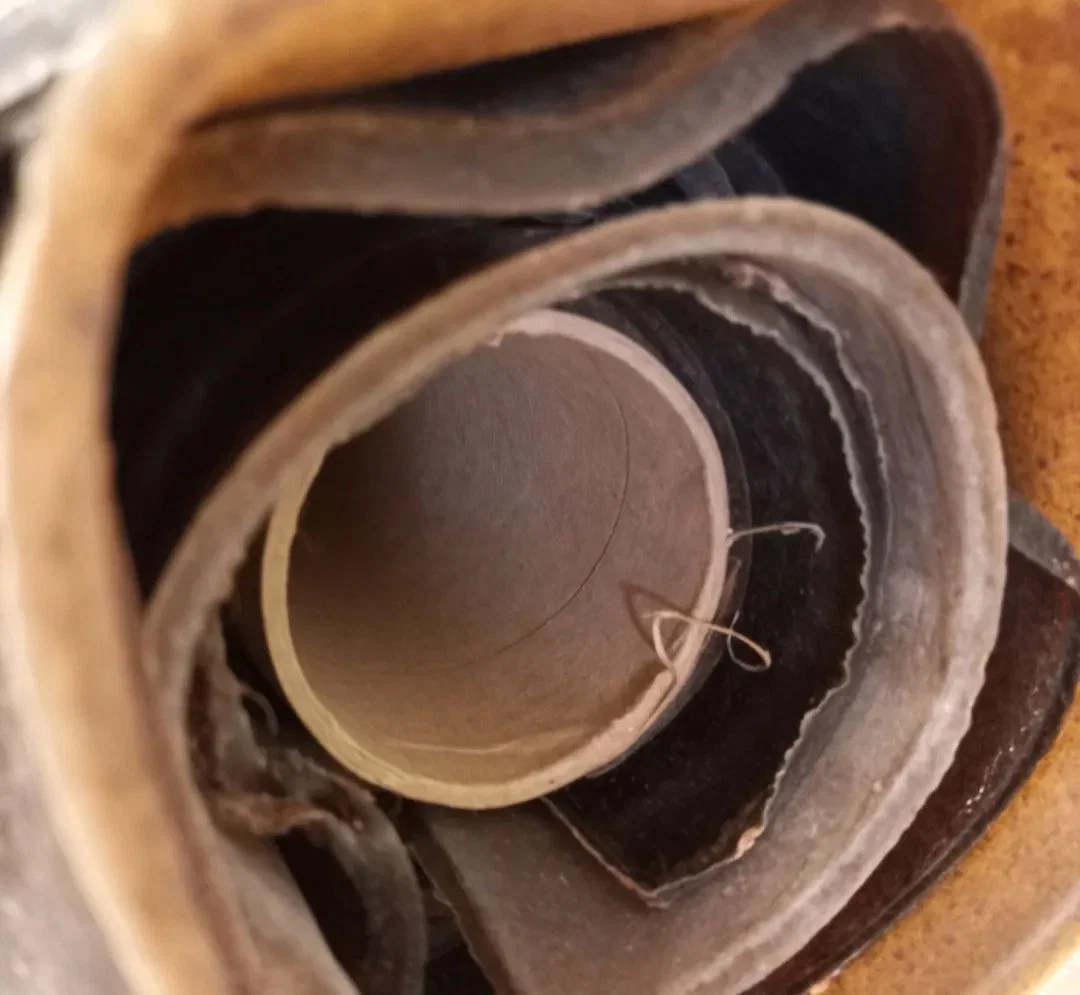
On the vegan question, Mónica’s answer is unequivocal:
“Yes, it is a 100% vegan material, as it contains no raw materials of animal origin whatsoever.”
The Portuguese part is just as firm. The carob is Portuguese, the production takes place in Portugal and so does the technology behind it.
“Alfarroba.Tex is made with 100% Portuguese carob, and that is something I will not give up.”
You don’t need to be a big brand
Anyone can buy Alfarroba.Tex. There are no minimum order quantities, and so far every order has been fulfilled. You can start with an A5 sample and a technical data sheet, and Mónica’s team is on hand to advise on how best to use the material. For a small studio that wants to see how it cuts, sews and glues before committing, that’s a real advantage.
Working with it and caring for it
If you’ve worked with leather, you’ll feel at home. Care is much the same: watch out for very humid environments, especially when storing finished pieces, avoid machine washing at high temperatures, and for everyday cleaning a damp cloth does the job. Craftspeople don’t have to learn a new way of working from scratch, which may turn out to be one of its biggest strengths.
From the tree to the wardrobe
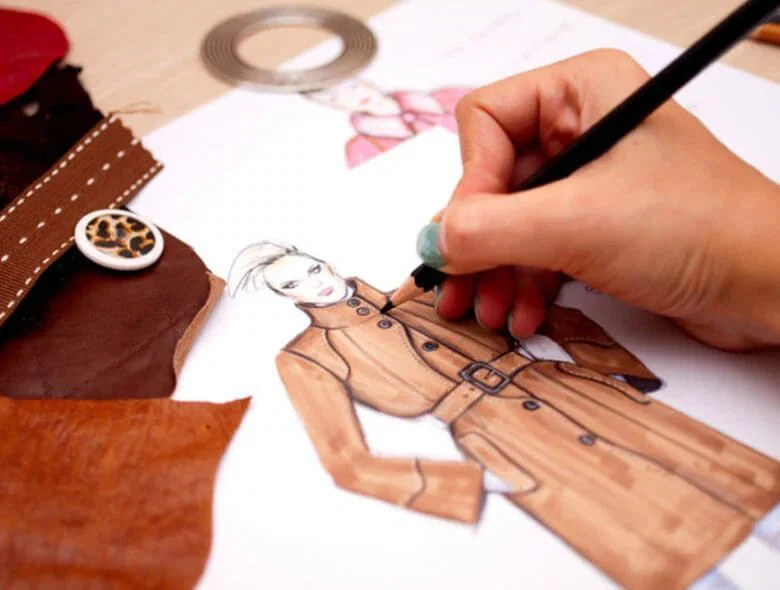
Cork, mushrooms, fruit waste: the list of materials we never expected to see in a pair of shoes keeps growing, and carob now has a place on it. New materials don’t have to replace the old ones. They widen the vocabulary available to designers, craftspeople and brands.
Carob is still carob. It turns out its journey doesn’t have to end in the kitchen.