
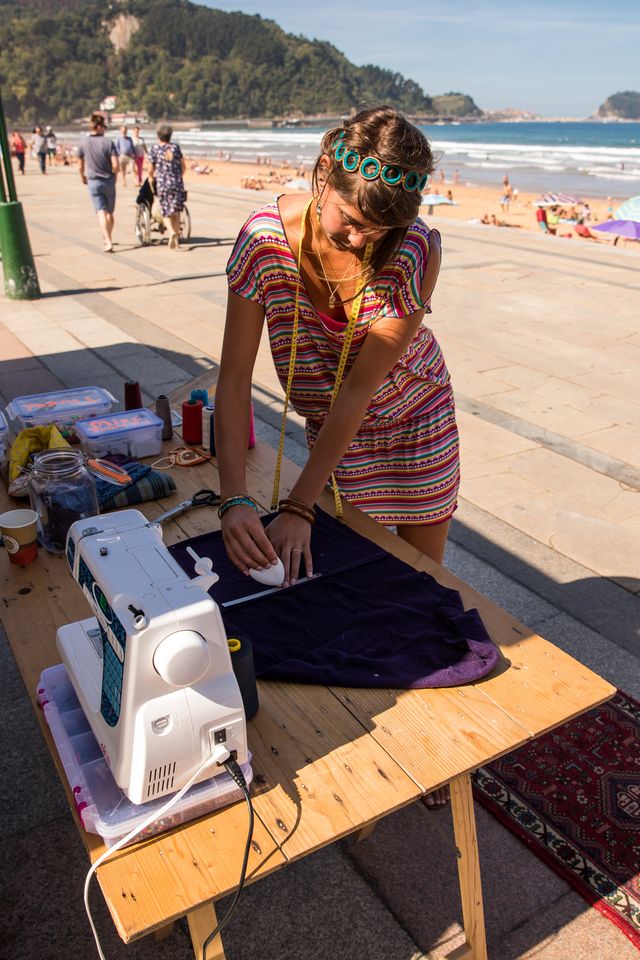
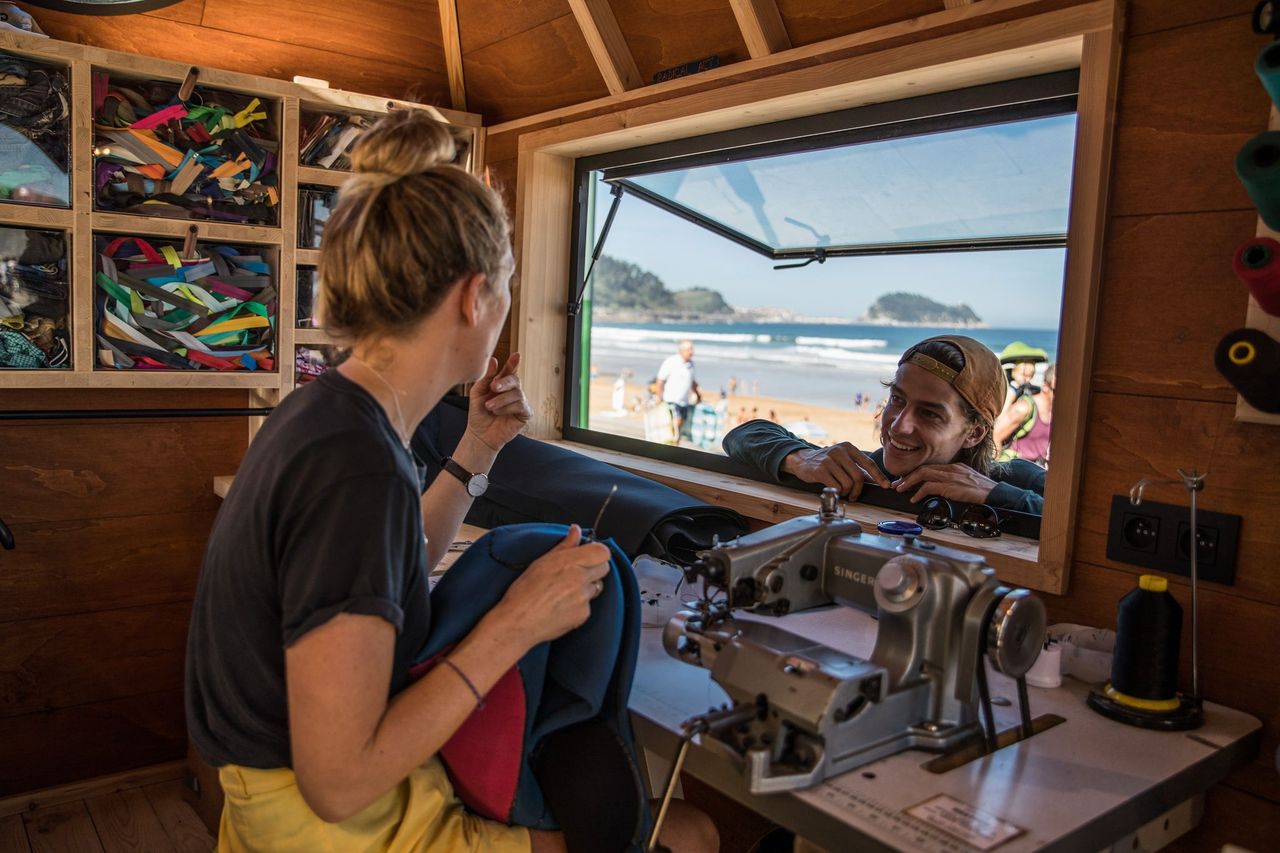
From 1 to 3 October 2026, Patagonia’s Wetsuit Repair Tour will stop at Baleal Surf Ranch in Ferrel, near Peniche, offering free repairs on wetsuits and clothing from any brand.
Surfers can bring one clean, dry item for repair on a first-come, first-served basis. The repair station will operate from 10:00 to 18:00, with additional activities planned during the three-day stop.
A leaking seam or small tear does not necessarily mean your wetsuit has reached the end of its life.
The Portuguese stop is part of a European tour travelling through the UK, the Netherlands, Belgium, France, Spain, Portugal, Germany and Switzerland. Patagonia says its repair specialists can tackle problems including leaking seams and fin cuts, alongside repairs to clothing.
And there could hardly be a more fitting location.
Peniche, together with nearby Ericeira and Nazaré, forms one of the most internationally recognised surfing areas in Europe, attracting professional surfers, beginners, long-term foreign residents and travelling surf communities from around the world.
It is also a place where the relationship between surfing and sustainability is particularly visible.
Free wetsuit repairs in Ferrel
The concept behind the tour is simple: repair what you already own and keep it in use for longer.
For the Ferrel stop, the practical details are:
When: 1–3 October 2026 – 10h-18h
Where: Baleal Surf Ranch, Ferrel, Portugal
Cost: Free repairs
What to bring: Wetsuits or clothing in need of repair – any brand
Limit: One clean item per person
How it works: First come, first served
Not accepted: Shoes, luggage or leashesFriday activities
Film screenings and activities linked to surfing, environmental action and local organisations
Also available
Opportunity to try Patagonia Regulator natural-rubber wetsuits while your suit is being repaired
Capacity is limited, so Patagonia recommends arriving early.
The event is part of Worn Wear, Patagonia’s long-running initiative encouraging people to care for, repair and extend the life of their clothing and outdoor equipment.
In Europe alone, Patagonia says it repaired more than 35,000 garments in 2025, working with 15 repair partners. It has also partnered with the United Repair Centre, with an ambition to reach 100,000 repairs a year by 2028.
Patagonia and the idea of buying less
Patagonia is a brand that has long stood out for its environmental commitments
Over the years, the company has become closely associated with environmental activism, responsible design, durability and the idea that good products should stay in use for as long as possible. That philosophy feels particularly relevant to Roupeiro, where we often return to the same simple principle: one of the most sustainable things we can do is make better use of what we already own.
Founded by climber and surfer Yvon Chouinard, Patagonia has spent decades placing environmental responsibility at the heart of its identity. Its purpose statement is characteristically direct: “We’re in business to save our home planet.”
That commitment now extends beyond products and campaigns to the way the company itself is structured.
In 2022, the Chouinard family transferred Patagonia’s voting shares to the Patagonia Purpose Trust, created to protect the company’s mission. The non-voting shares are held by the Holdfast Collective, with profits not reinvested in the business available to support environmental work. Patagonia remains a for-profit company, but its ownership structure was deliberately designed to keep its environmental purpose at the centre of the business.
Repair is one of the clearest expressions of that philosophy.
Patagonia reported 174,799 products repaired globally in its 2025 financial year, reflecting a long-standing effort to extend product life rather than treat replacement as the default.
The company is also open about the work that remains. In its own impact reporting, Patagonia recorded 182,646 metric tonnes of CO₂-equivalent emissions in FY25 and says around 85% of its products still do not have an end-of-life solution.
That openness is part of what makes the brand interesting to follow.
Sustainability is not a finished state, and Patagonia does not present it as one. Instead, the company continues to invest in durability, repair, material innovation and different ways of thinking about consumption.
The Wetsuit Repair Tour is a particularly tangible example of that approach: instead of introducing something new, it asks a much simpler question — can the product you already own stay in use for longer?
Note: Patagonia provided Roupeiro with information about the event. This article was independently written and was not paid for or approved by Patagonia.
What independent sustainability assessments say about Patagonia
The company is a certified B Corporation, meaning its social and environmental performance is independently assessed by B Lab. Patagonia’s current B Corp profile gives it a particularly strong overall score, reflecting its work across areas including environmental impact, workers, communities and governance. Patagonia currently has a score of 166, well above the 80 points required for the certification.
Independent fashion-rating platform Good On You also currently rates Patagonia “Good” overall. Its latest assessment highlights positives such as supply-chain traceability, Fair Trade certification in final-stage production and the use of recycled or certified alternatives for many animal-derived materials. It also points out areas where there is still room to improve, including living wages across the supply chain.
For us, that balance is important. Patagonia has built an unusually strong environmental reputation, but sustainability is always a work in progress — and independent assessments help show the progress being made.
Those qualifications matter. Sustainability is not a prize a brand wins once. It involves materials, emissions, workers, durability, transportation, consumption and what happens to a product after someone no longer wants it.
And that last question is where repair becomes particularly interesting.
Why Ferrel makes perfect sense
A wetsuit repair tour landing in Ferrel feels less like a random brand stop and more like arriving in the middle of Portugal’s surf heartland.
Just a few kilometres away, Supertubos in Peniche is a regular stop on the World Surf League Championship Tour, bringing some of the best surfers in the world to this stretch of coast. Around Peniche, Ferrel and Baleal, surfing is part of everyday life: surf schools, board racks, wetsuits drying in the sun, international visitors staying for a week — and plenty who end up staying much longer.
Head south and you reach Ericeira, around an hour away by car. In 2011, it became the first World Surfing Reserve in Europe and only the second in the world, with famous breaks including Ribeira d’Ilhas and Coxos. The designation is not just about great waves; it also recognises surf culture, environmental value and the importance of protecting the coastline.
And then, to the north, there is Nazaré — home to Praia do Norte and some of the biggest waves ever surfed. It has helped turn Portugal into one of the most recognisable surf destinations in the world, drawing athletes, photographers and spectators from far beyond Europe.
Put all of that together and this part of Portugal has become something of an international surf corridor: Nazaré, Peniche/Baleal and Ericeira, each with a very different personality, but all connected by the Atlantic and a strong mix of local and international surf communities.
That makes the Ferrel event especially relevant. This is not just a stop on a European tour — it is happening in a place where surf is very much part of daily life.
Surfing and the push for a lighter footprint
There is another reason why repair feels particularly at home within surf culture.
Surfers have long been closely connected to environmental causes, particularly ocean conservation, water quality, plastic pollution and the protection of coastlines and waves. Ericeira’s World Surfing Reserve is a good example of that relationship, bringing surf culture and environmental stewardship together in a very practical way.
Of course, like most modern activities, surfing also comes with environmental challenges.
Travelling in search of waves can involve significant distances. Surfboards and wetsuits rely on complex materials, and traditional neoprene in particular has raised environmental concerns. Popular surf destinations can also feel the pressure that comes with tourism and growing international communities.
What is encouraging is that these issues are increasingly part of the conversation within the surf world itself.
Brands, surfers, local organisations and environmental groups are exploring better materials, cleaner production, coastal protection and, importantly, ways of keeping existing equipment in use for longer.
Repair is one of the simplest and most practical parts of that effort.
A wetsuit that can be repaired does not need to be replaced straight away. And in a community so closely connected to the ocean and natural environment, extending the life of the equipment already in circulation feels like a particularly meaningful place to start.
The Wetsuit Repair Tour does not solve every environmental challenge associated with surfing — nor does it claim to. But it represents a practical step in the right direction, and one that makes sustainability tangible for surfers themselves.
The most sustainable wetsuit may be the one you already own
Repair is rarely as exciting as launching something new. There is no new colour, new season or new product to sell. But from a circularity perspective, that is precisely its appeal.
A wetsuit with a damaged seam or small tear may still contain years of useful materials and manufacturing effort. Fixing one problem can delay the need for another product to be produced and purchased.
Patagonia itself argues that keeping gear in use for more sessions reduces overall consumption and waste.
For Roupeiro, that idea applies far beyond surfing.
More sustainable consumption is not only about finding brands with better materials or higher sustainability ratings. It also means taking care of what we already have, wearing it for longer and resisting the assumption that damage automatically means replacement. Sometimes circular fashion is as simple as sewing something back together.
And if your wetsuit has acquired a leaking seam, a fin cut or the accumulated damage of several seasons in the Atlantic, the first three days of October might be a good opportunity to see how much life it still has left.
Editorial note: Patagonia provided Roupeiro with information about the Wetsuit Repair Tour. Additional information about the company’s sustainability performance and impact was independently researched by Roupeiro.