Roupeiro - Sustainable living in Portugal
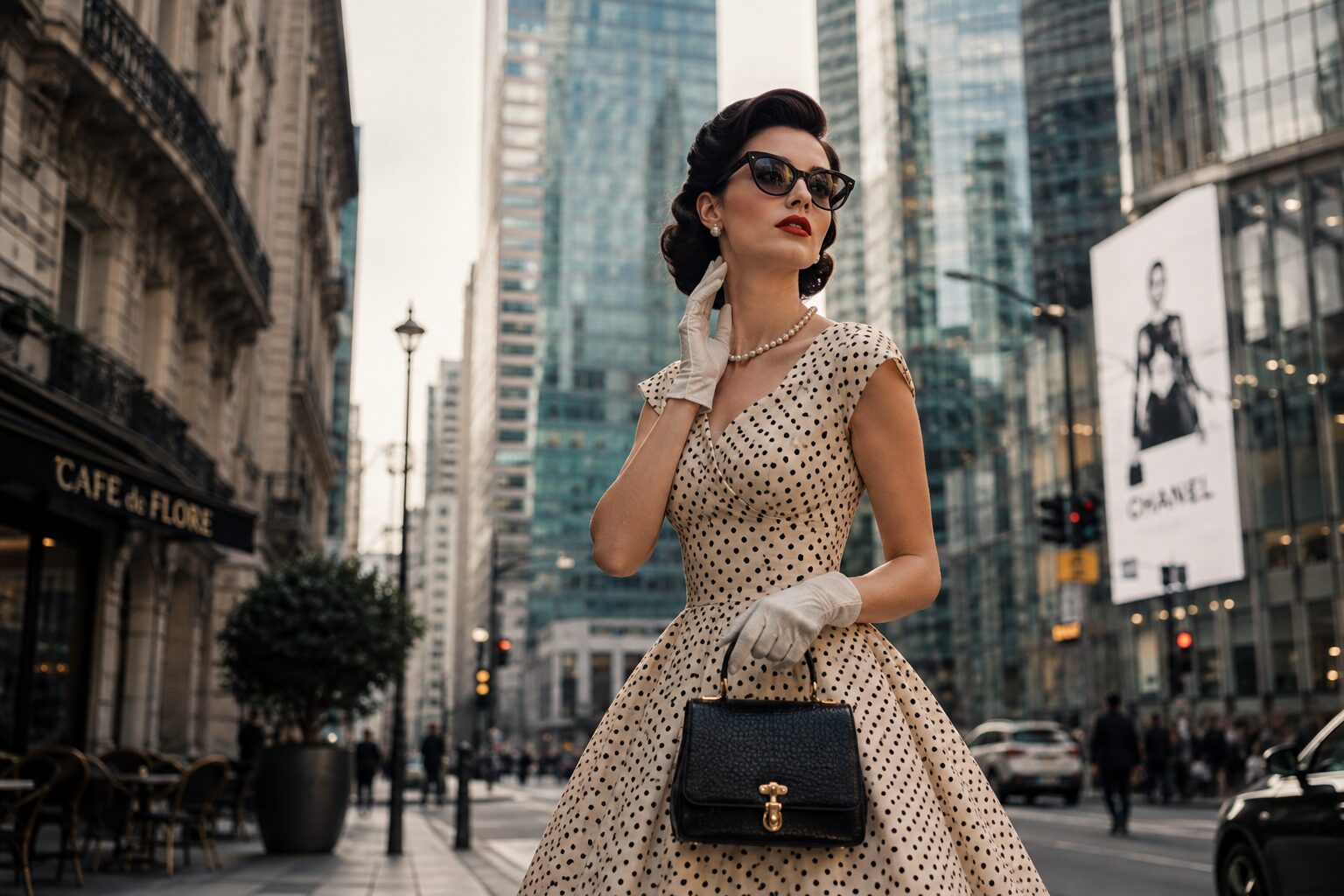
What does vintage fashion have to do with Port wine?
Why "vintage" comes from wine, what it means for Port and for fashion, and where to shop sustainable vintage in Lisbon and Porto.

What do a vintage dress and a bottle of Vintage Port have in common?
At first, perhaps not much. One belongs in a wardrobe, the other in a cellar. One is worn, the other is tasted. Yet the word vintage connects them in a surprisingly direct way — and that connection begins in the vineyards.
In Portugal, where Port wine is part of the country’s cultural heritage, the story of the word vintage takes on an especially interesting meaning. From grapes and exceptional harvests to clothes that have survived decades, vintage has come to describe something from another time that is considered worth keeping.
And perhaps that is why vintage fashion has something important to say about a more sustainable way of living.
In short: vintage comes from the French word for grape harvest. In Port wine, it means a single exceptional year. In fashion, it means genuine clothing from an earlier era, usually 20 or more years old.
From vineyards to vintage
The word vintage has its roots in the world of wine.
It comes from the Old French vendage or vendenge, meaning the harvest of grapes, which can ultimately be traced back to the Latin vindemia. The Latin word referred to the gathering or harvesting of grapes. Over time, the meaning of vintage evolved in English, first referring to a particular wine’s year or harvest and later to something characteristic of an earlier period.
So before vintage became a word used to describe fashion, furniture, cars or design, it was connected to something much more specific:
the harvest of a particular year.
That history is still very much alive in Portugal.
What does “Vintage” mean in Port Wine?
If you have spent time around Port wine, you will probably have come across the word Vintage.
But a Vintage Port is not simply an old Port wine.
According to the Instituto dos Vinhos do Douro e Porto (IVDP), Vintage Port must come from a single harvest and have exceptional organoleptic qualities. The IVDP describes Vintage as the highest expression of quality within Port wine and requires a minimum exceptional classification for the designation.
This is an important distinction.
A vintage is not valuable merely because it has become old. Its value comes from the combination of time, origin, character and quality.
A particular harvest produces something considered exceptional. That wine is then preserved, often for decades, allowing time to become part of its story.
And this is where the connection with vintage fashion becomes fascinating.
So, what is vintage fashion?
In fashion, vintage generally refers to genuine garments or accessories from a previous era. A commonly used benchmark is around 20 years old, although the definition is not a strict universal rule and context matters. Fashion researchers also point out that vintage is difficult to define purely by age because it overlaps with concepts such as second-hand, retro and antique.
But age alone does not make something special.
A twenty-year-old T-shirt is not necessarily a remarkable vintage piece.
What makes vintage fashion interesting is the combination of age, design, cultural context, craftsmanship, materials and identity.
A 1960s dress can tell us something about the decade in which it was made. A 1970s jacket can reveal a different approach to tailoring, fabric and proportion. A 1990s designer piece can suddenly become relevant again decades later.
Just as with wine, time can change how we see something.
Something that was once ordinary can become distinctive.
Something that was once fashionable can become iconic.
And something that has survived can become worth preserving.
Vintage vs second-hand vs retro
This is one of the most important distinctions when talking about vintage fashion.
Second-hand simply means that something has had a previous owner.
Vintage generally refers to something originating from an earlier period.
Retro usually describes something made today that takes inspiration from the past.
And antique is generally used for objects that are considerably older, often 100 years or more.
These categories can overlap in the real world, but they are not interchangeable.
A modern dress inspired by the 1970s may look vintage, but it is not necessarily vintage.
A second-hand jacket from last year is pre-owned, but it is not vintage.
A genuine jacket from the 1970s, however, carries something that neither of those pieces can reproduce completely:
its own history.
What makes vintage fashion worth keeping?
Perhaps this is where the comparison with Vintage Port becomes most interesting.
A great vintage is not simply about surviving for a long time. It is about remaining meaningful over time.
The same can be true of clothing.
Some vintage garments have remarkable construction and materials. Others have an unmistakable design language. Some are associated with particular designers, subcultures or historical moments. Others simply have a quality and character that is difficult to find in today’s mass-produced fashion.
And then there is something less tangible:
the story.
A vintage garment has already lived a life before it reaches your wardrobe.
It may have belonged to another person. It may have travelled through another city. It may have been worn to parties, work, celebrations or ordinary days.
When you buy vintage, you are not only buying an object from the past.
You are giving it another chapter.
Can vintage fashion be more sustainable?
This is where vintage becomes particularly relevant today.
Fashion requires significant quantities of materials, energy and other resources, while short clothing lifespans contribute to waste. Extending the useful life of garments is therefore an important part of moving towards a more circular fashion system. Organisations such as Humana Portugal explicitly promote second-hand clothing as a way of keeping garments in use for longer.
Buying vintage can fit naturally into this approach.
Instead of creating demand for another newly manufactured garment, you can choose something that already exists.
Instead of discarding a piece because it is no longer part of the current trend cycle, you can repair it, wear it and keep it in circulation.
And instead of thinking about clothes as disposable products, vintage encourages a different relationship with what we own:
When buying new, choose quality, because those are the garments that endure. Then look after them, wear them for longer and value what is already here.
Of course, buying something second-hand or vintage does not automatically make every purchase sustainable. How far you travel to buy it, how often you wear it, how you care for it and how long you keep it all matter.
But the underlying principle is powerful:
the most sustainable garment is often one that already exists and continues to be worn.
Vintage fashion and the idea of longevity
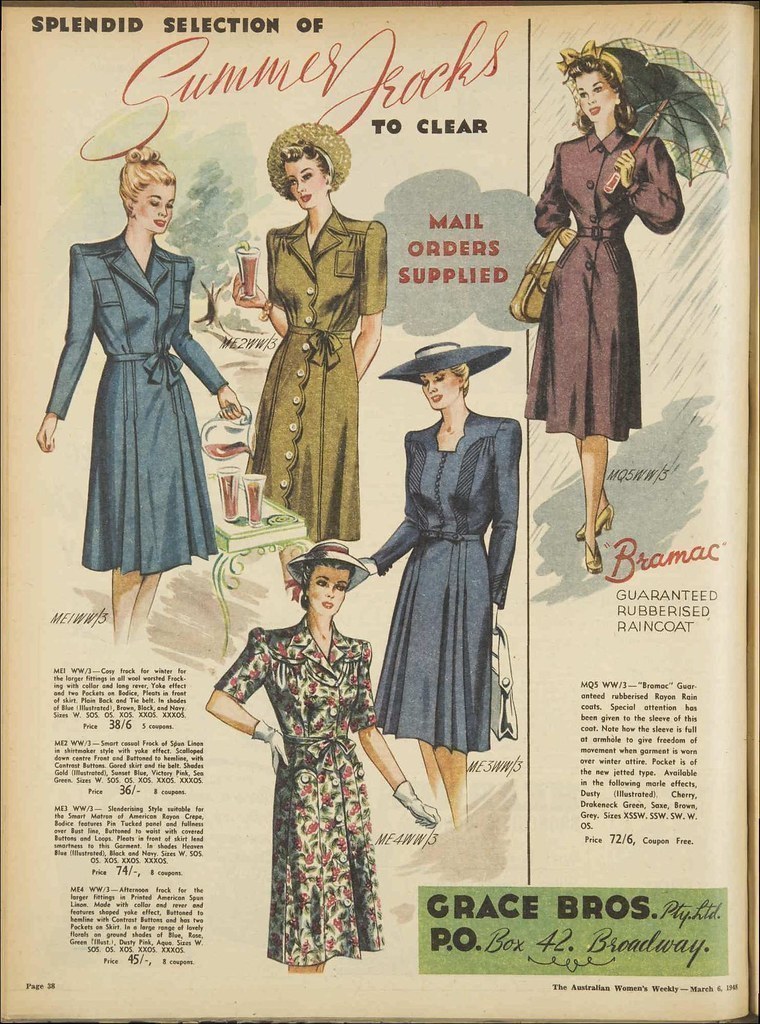
Perhaps this is the real connection between vintage fashion and Vintage Port.
Both challenge the idea that value has to be immediate.
A new piece of clothing can be exciting because it is new.
A Vintage Port can be exciting because of its potential to evolve over time.
A vintage garment can be exciting because it has already survived that test.
There is something deeply appealing about objects that do not need to be replaced every season to remain relevant.
In a world increasingly dominated by fast trends and fast consumption, vintage offers another possibility:
buy less, choose carefully, look after what you have, and let time add value rather than take it away.
Where to find vintage clothing in Portugal
Portugal has a growing second-hand and vintage scene, particularly in Lisbon and Porto. Lisbon, in particular, has seen a proliferation of vintage and second-hand shops, markets and specialised boutiques. Recent local guides list dozens of places across the city, ranging from affordable second-hand stores to highly curated vintage and designer collections.
If you are visiting Portugal and want to explore vintage fashion, Lisbon is a particularly good place to start.
Vintage shops in Lisbon

Lisbon has a surprisingly diverse vintage scene, from independent shops with carefully selected pieces to larger second-hand stores.
We have recently created a walking tour through some of the most iconic vintage shops in Lisbon Baixa. It’s a very green way of knowing the city and the shops 🙂
Some places worth exploring include:
- A Outra Face da Lua (Baixa) — one of Lisbon’s long-established names in second-hand and vintage fashion.
- Paraphernalia Vintage Store — a vintage-focused shop in Baixa.
- Retro City — a vintage clothing shop in the Anjos area.
- Mess Vntg – Vintage Shop Lisbon — a curated vintage shop in the São Bento/Estrela area.
- CLUBE ROYALE Vintage Shop — another option around Poço dos Negros.
Lisbon’s vintage landscape changes frequently, so it is worth checking opening hours and current locations before visiting. Recent guides also highlight the city’s markets and second-hand scene, including the Feira da Ladra.
Vintage shops in Porto
Porto also has a growing vintage culture, with independent shops scattered around the city.
One example is Mão Esquerda Vintage, while Wild at Heart is another vintage clothing option in central Porto.
The experience is different from simply shopping in a conventional fashion store. Part of the pleasure is in searching, discovering and finding something that feels individual rather than mass-produced.
How to shop vintage more sustainably
If sustainability is part of the reason you are interested in vintage, there are a few simple principles worth keeping in mind.
Buy something you will actually wear
The most sustainable vintage purchase is not necessarily the oldest or rarest piece.
It is the one you will wear again and again.
Look for quality
Pay attention to fabric, construction, seams, fastenings and the overall condition of the garment.
A well-made piece that can remain in your wardrobe for many years is usually a better choice than something bought simply because it is cheap.
Repair rather than replace
Small imperfections are part of the story of vintage clothing. A missing button, loose seam or worn hem does not necessarily mean a garment has reached the end of its life.
Sometimes it just needs a little care.
Avoid buying just because it is vintage
Vintage can be addictive.
The thrill of finding something unique can easily turn into another form of overconsumption.
The point is not to replace fast fashion with fast vintage.
It is to develop a different relationship with clothing.
From the vineyard to the wardrobe
Perhaps the most interesting thing about the word vintage is that its original meaning has never completely disappeared.
It still carries the idea of a particular year, a particular harvest and something whose qualities are recognised with time.
In Portugal, that meaning remains especially visible in Vintage Port.
And in fashion, the word has travelled far beyond wine — but perhaps it has taken some of its original philosophy with it.
A vintage garment is not valuable simply because it is old.
It can be valuable because it has character, quality, history and the ability to remain relevant.
Much like a great Vintage Port, it is something that has survived its moment.
And perhaps that is the most sustainable lesson of all:
not everything needs to be new to have value.
Sometimes, the things worth keeping are the ones that have already stood the test of time.