Sustainable living in Portugal
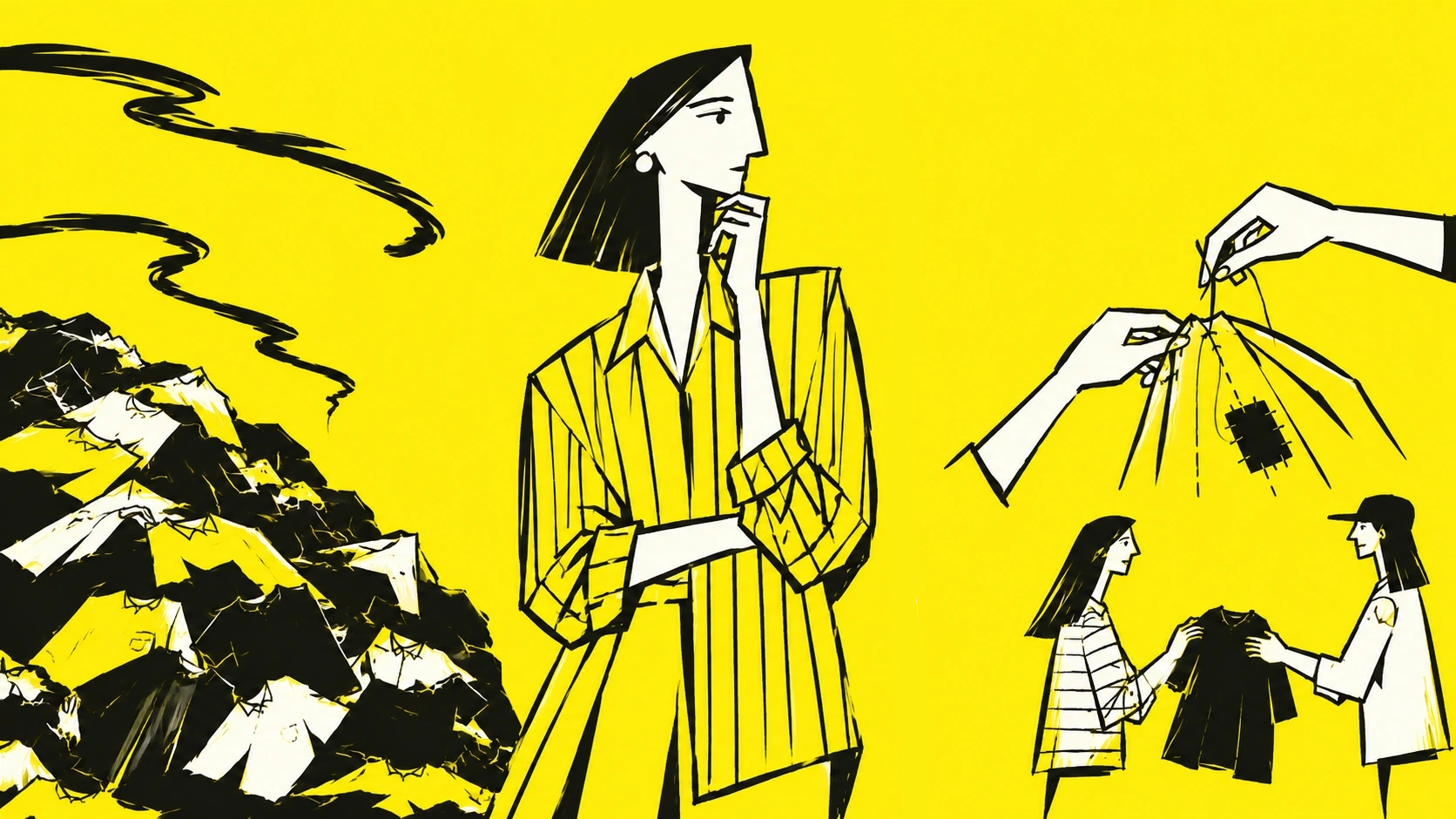
Nobody buys sustainability. Do you?

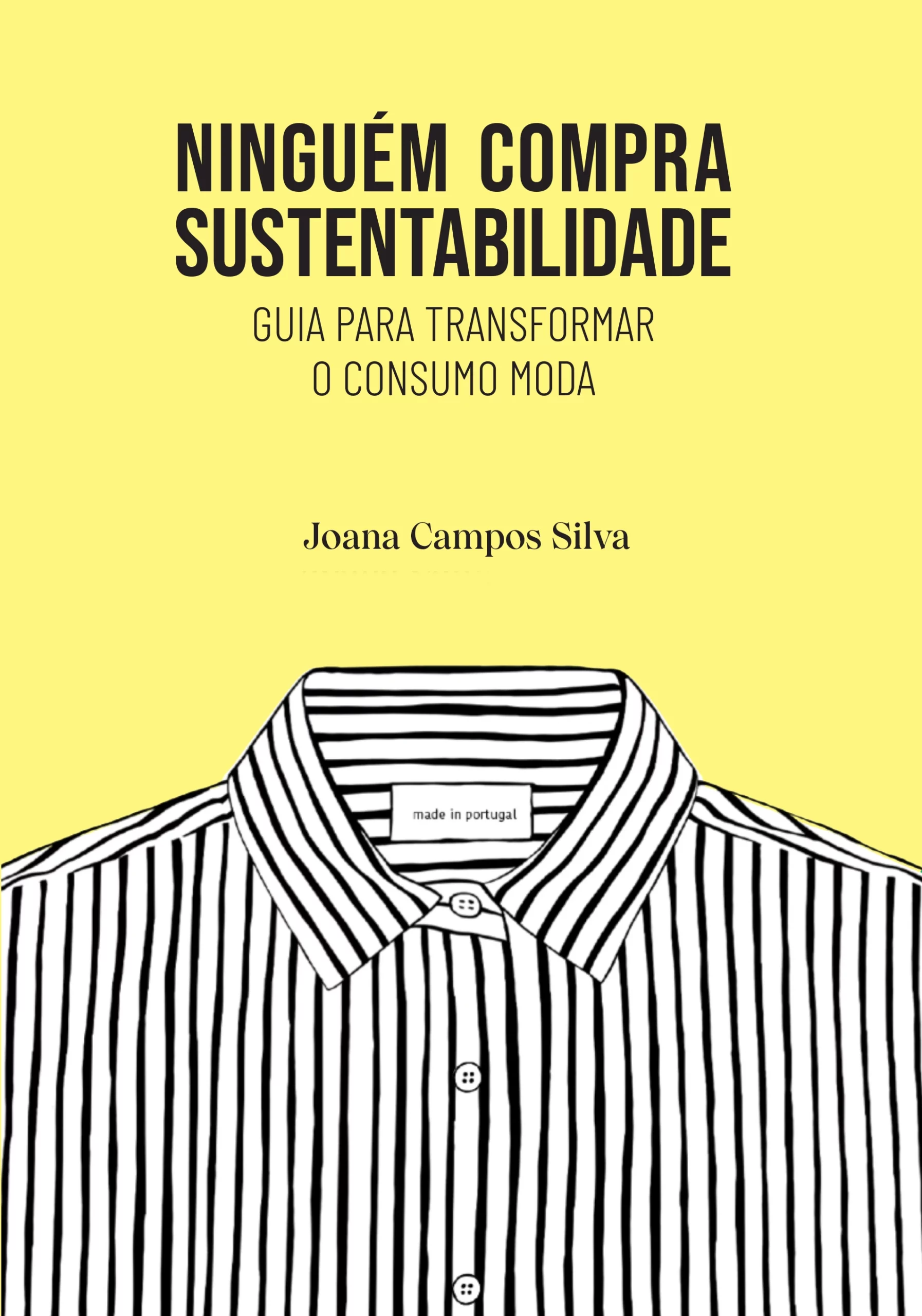
I recently came across a book with a title that made me stop and think: Nobody Buys Sustainability (Ninguém Compra Sustentabilidade, in Portuguese), by Joana Campos Silva.
At first, I wasn’t quite sure what to make of it. Nobody buys sustainability? What does that actually mean? The more I thought about it, the more questions it raised. And perhaps that is precisely the point.
If sustainability doesn’t sell, what will save us?
I find it difficult to believe that anything will save us without a profound change in attitude. We continue to live as though we had unlimited credit on this planet, as though resources were inexhaustible and the consequences of our choices could be postponed indefinitely. If nobody is willing to embrace sustainability, how can we expect things to change?
And this is not just an environmental problem. It is also a matter of social justice.
In fashion, this contradiction is particularly evident. We are encouraged to buy more, faster and more frequently, while being told to consume consciously, choose better, invest in durable pieces and reduce waste.
But how do you convince people to buy less when the entire system is designed to encourage them to buy more?
That question stayed with me and eventually led me to Joana Campos Silva, the author of the book. Its title is provocative, but it also captures an uncomfortable truth: perhaps sustainability, on its own, is not enough to change the way we consume.
“What’s the point of having a more sustainable product if we don’t like it?”
Joana begins by challenging a familiar but simplistic assumption: that offering more sustainable products will automatically make people choose them.
“Sustainability becomes desirable when it responds to something a person values: feeling good, finding a piece that fits well, saving money or simplifying everyday life” she explains.
This shifts the focus of the discussion. Rather than asking how to convince people to be more sustainable, perhaps we should ask how to make sustainable choices better choices for their everyday lives.
After all, a garment can be more sustainable and still be undesirable, unaffordable or inconvenient.
There is another important distinction: sustainability is not automatically synonymous with quality.
“We also need to be careful with the idea that a product marketed as sustainable necessarily offers better quality or durability. These characteristics need to be demonstrated.”
A green label is not enough. We need to know what we are actually buying.
Brands that want to take sustainability seriously must demonstrate the value of their products and create the conditions for them to be used for longer: through repair services, alterations, maintenance and resale opportunities.
This last point is particularly important. If we want to buy less, we need alternatives to purchasing new products.
Buying less when business depends on selling more

Here lies one of the greatest contradictions in contemporary fashion: how can a company advocate buying less when its business model depends on selling more?
Joana does not shy away from the question.
“There is a real contradiction if a company’s success continues to depend exclusively on the number of new products sold.”
The answer, she argues, lies in rethinking business models. Brands can continue to create value through maintenance, repair, rental and resale services.
This also means reconsidering what we understand by novelty.
“The desire for something new can be fulfilled through a new combination, a transformed piece or a second-hand item that is new to us.”
Perhaps this is one of the most interesting ideas in the book: we don’t necessarily need to give up the pleasure of novelty. We need to rethink what makes something new.
A garment we already own can be given a new lease of life. A second-hand find can feel like a discovery. A repair can become a distinctive detail.
The challenge is to make these alternatives “simple, desirable and accessible”.
Awareness is not enough
Telling consumers to buy better is easy. Acknowledging that they don’t always have the means to do so is harder.
People make choices within the constraints of their budgets, available time, the products on offer and the information they can access. This is one of the central points of my conversation with Joana.
“Awareness, on its own, is not enough.”
We may know that a garment should be repaired and still end up replacing it. Perhaps we cannot find anyone to repair it, the process takes too long or the cost exceeds that of buying something new.
“We need to make repair a viable option”
This is important because it challenges the tendency to place so much responsibility on individual consumer choices.
Education remains essential. We need consumers who can think critically and question what brands tell them. But individual awareness cannot solve a problem created by an entire system.
“Education remains essential for developing critical thinking and the ability to make informed choices. But it must be accompanied by rules and infrastructure that support those choices.”
Responsibility is shared, although each stakeholder has a different role.
The industry decides what it produces, how it produces it and which behaviours it encourages. Public authorities establish the rules. Consumers make choices within that context.
As Joana puts it, “it is very difficult to change habits when the environment around us constantly rewards the opposite behaviour”.
From fast fashion to real-time fashion
The fashion industry is not just producing more. It is producing faster.
We have moved from fast fashion to ultra-fast fashion and are already beginning to talk about real-time fashion. Artificial intelligence can identify trends on social media and turn them into new products almost immediately.
I asked Joana whether technology is making fashion even more incompatible with sustainability.
Her answer is more nuanced than a simple yes or no.
“If we use it to accelerate trends, multiply launches and encourage impulse buying, we are increasing the speed of a model that already generates excess.”
But technology can also serve a different purpose: improving forecasts, preventing overproduction, reducing waste, facilitating repair and resale, and helping us understand a garment better, from its composition to the care it requires.
The issue, then, is not what technology can do, but how we choose to use it.
“We need to decide what we want to optimise. Selling more and more quickly, or creating more value from the resources we already have?”
It is a question that extends far beyond fashion.
Making a process more efficient does not necessarily reduce its overall impact. A company may use fewer resources per garment while increasing its total footprint by producing significantly more.
Efficiency means little if production volumes keep growing.
How can we recognise a truly sustainable brand?
In a market where almost every brand has found a way to talk about sustainability, distinguishing genuine progress from greenwashing has become increasingly difficult.
Joana suggests a different starting point.
“I would start by being sceptical of the idea of perfection.”
Rather than looking for brands that claim to be completely sustainable, we should look for those that can demonstrate what they do, acknowledge what still needs to improve and provide concrete information.
Product composition. Manufacturing locations and conditions. Durability. Repair options. The management of surplus stock.
And, above all, the business model.
“A collection made with recycled materials needs to be assessed in the context of the brand’s overall activity: how much it produces, how it manages surplus stock and whether it encourages long-term use or constant replacement.”
This distinction matters.
A recycled material may be a good choice, but it does not tell the whole story of a garment. A certification may be relevant, but we need to understand exactly what it covers. And campaigns filled with green leaves and words such as “conscious”, “eco” or “responsible” are no substitute for evidence.
Brands, Joana argues, should provide “verifiable data, explain how it was obtained and communicate the limitations of their claims”.
Consumers, meanwhile, need to remain sceptical — not of everything, but of claims that seem too good to be true.
What if our wardrobes could talk?
This seemed like a particularly fitting question to ask someone who has written about consumption and sustainability.
If Joana’s wardrobe could talk, what would it say?
Her answer is perhaps the most personal moment of our conversation.
“I think it would say that I love fashion and that I also live with the contradictions I write about.”
I relate strongly to this answer. It reflects contradictions I experience myself, and I appreciate that Joana doesn’t speak from a position of superiority. She doesn’t present herself as someone who has found the perfect formula for sustainable consumption.
Quite the opposite.
“It took me 10 years to change my consumption habits.”
She adds: “Awareness develops over time, through learning and making adjustments.”
This is worth remembering. Sustainability can easily become a source of guilt, where every wrong purchase feels like a moral failure.
But no one is immune to desire, convenience or the occasional impulsive purchase. Not even those who write about it.
Perhaps change begins with recognising these contradictions rather than pretending they don’t exist.
In her book, Joana tells the story of a jumpsuit belonging to her son that she repaired and sold second-hand. The person who bought it particularly liked the detail, unaware that it was a repair.
“What could have been seen as a flaw became a reason to love the garment.”
It is a small but powerful shift in how we look at clothing.
We are used to seeking out what is new, perfect and flawless. Yet a repaired garment can tell a story. Signs of wear can become part of its value. What we once considered a flaw might be precisely what makes a piece special.
“Do you really need it?”
Towards the end of our conversation, I ask Joana what the one question our wardrobe should ask us before our next purchase would be.
Her answer is simple: “Do you really need it?”
Perhaps this is too simple a question to solve such a complex problem. But that may be precisely why it works.
It doesn’t demand perfection or tell us we should never buy anything. It simply asks us to pause.
Do I really need this piece?
Do I already own something similar?
Will I wear it often?
Do I genuinely love it?
Can I repair what I already have?
Can I find it second-hand?
And, above all, am I buying it because I need it or because I’ve been made to want it?
After reading Joana’s book and talking to her, I’m increasingly unsure whether the question of whether sustainability sells is even the right one.
Perhaps we don’t need to sell sustainability.
Perhaps we need to build a system in which what is better for people, businesses and the planet is no longer an exceptional choice, but simply the easiest one.
Until then, we’ll continue to live with this contradiction: wanting to consume better while being constantly encouraged to consume more.
I live with it too.
And perhaps that’s why Joana’s final question stays with me long after I close the book:
Do you really need it?