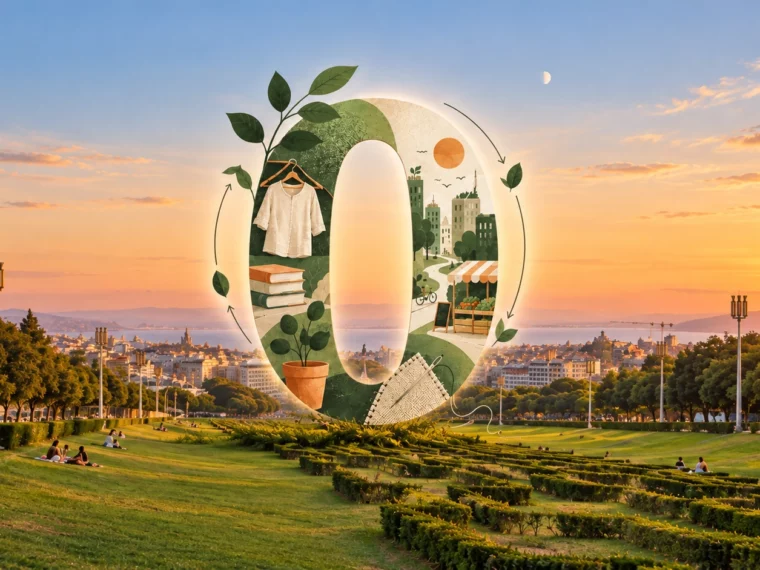
For two days, Parque Eduardo VII became a different kind of city — one built around swapping, repairing, urban growing, lower-waste food, tap water, kombucha and even a few very cheerful chickens.
We went to Cidade do Zero and came across several brands we knew and love, as well as some new ones we’d like to bring to Roupeiro. But what stayed with us most was the sheer variety of ideas gathered in one place — different ways of creating cities that are more circular, produce less waste and, ultimately, feel more human.
A swap market that felt familiar
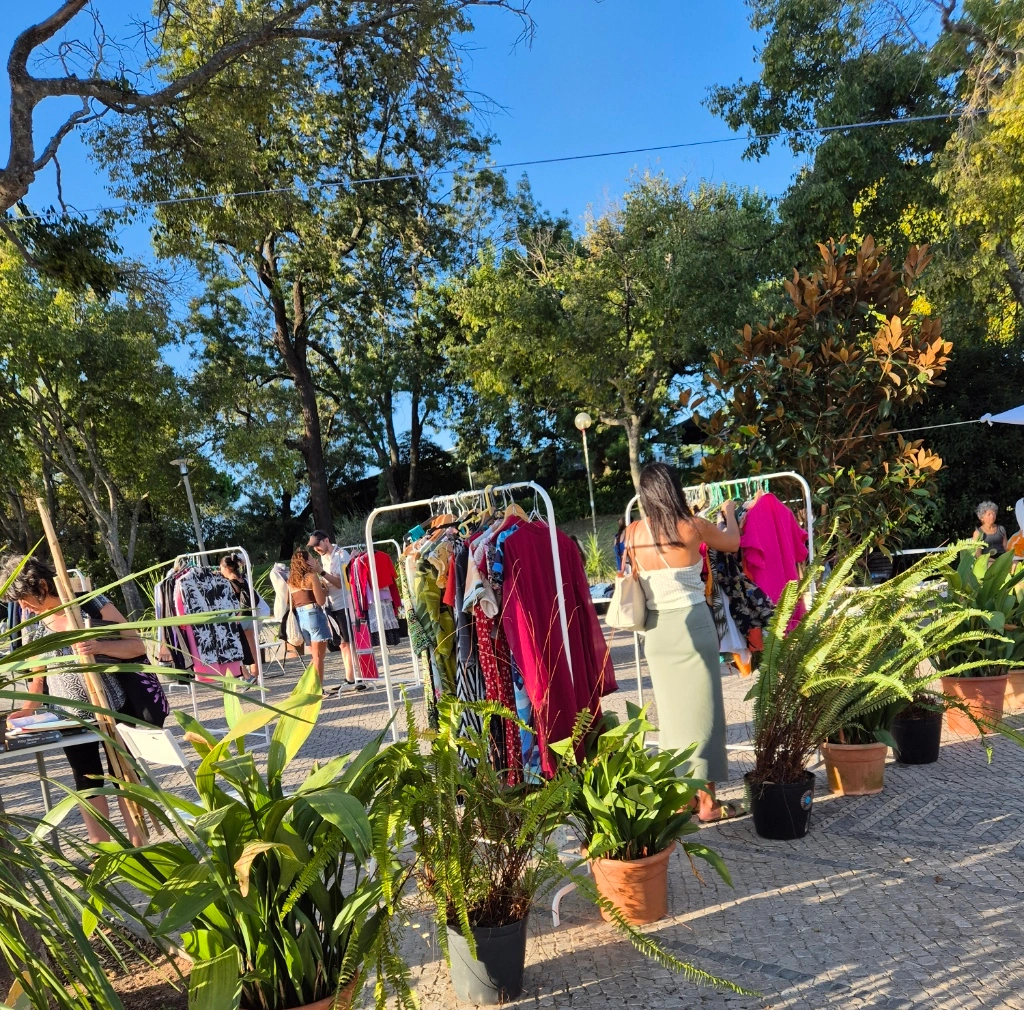
The Exchange Market, run by let’s swap, did not disappoint..
The concept is simple: bring clothes you no longer wear and exchange them for something else. Perhaps that simplicity is precisely what makes it work.
For us, there was also something familiar about it. Roupeiro itself began with a similar desire to bring people closer together and help give a second life to clothes that already exist.
At an event dedicated to circularity, it felt particularly important to see clothes swapping given such a prominent place. Not everything has to involve buying something new — even when that new item has been produced more sustainably.
Sometimes, the piece we need already exists. It is simply sitting in somebody else’s wardrobe.
Repair before replacing
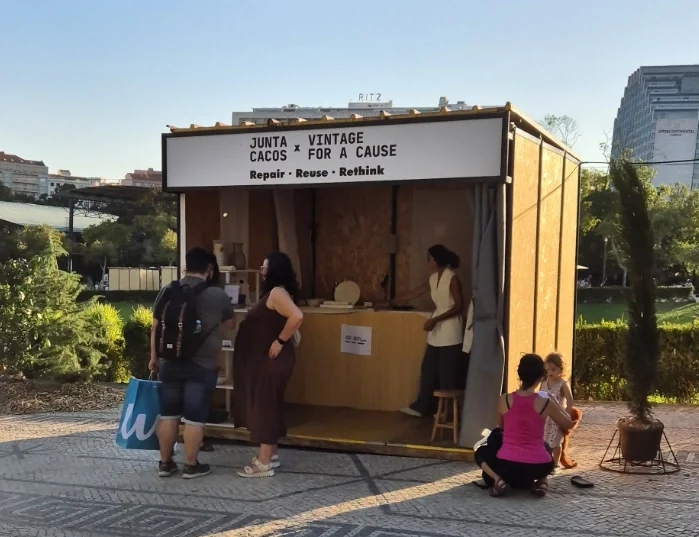
Repair also had a strong presence at Cidade do Zero.
There were different projects and approaches focused on extending the life of things that, in another context, might simply have been thrown away.
It is one of the basic principles of the circular economy, but one that is still easy to forget: something that is damaged is not necessarily something that has lost its value.
The same applies to clothes.
A seam, a zip, a small tear or a simple alteration can add years to the life of a garment. Repairing might not have the instant appeal of buying something new, but very often it is the more sensible option.
Vintage for a Cause and Junta Cacos even shared a stand at the event — two different projects working, in their own ways, to give materials and objects another life.
Chickens in Parque Eduardo VII
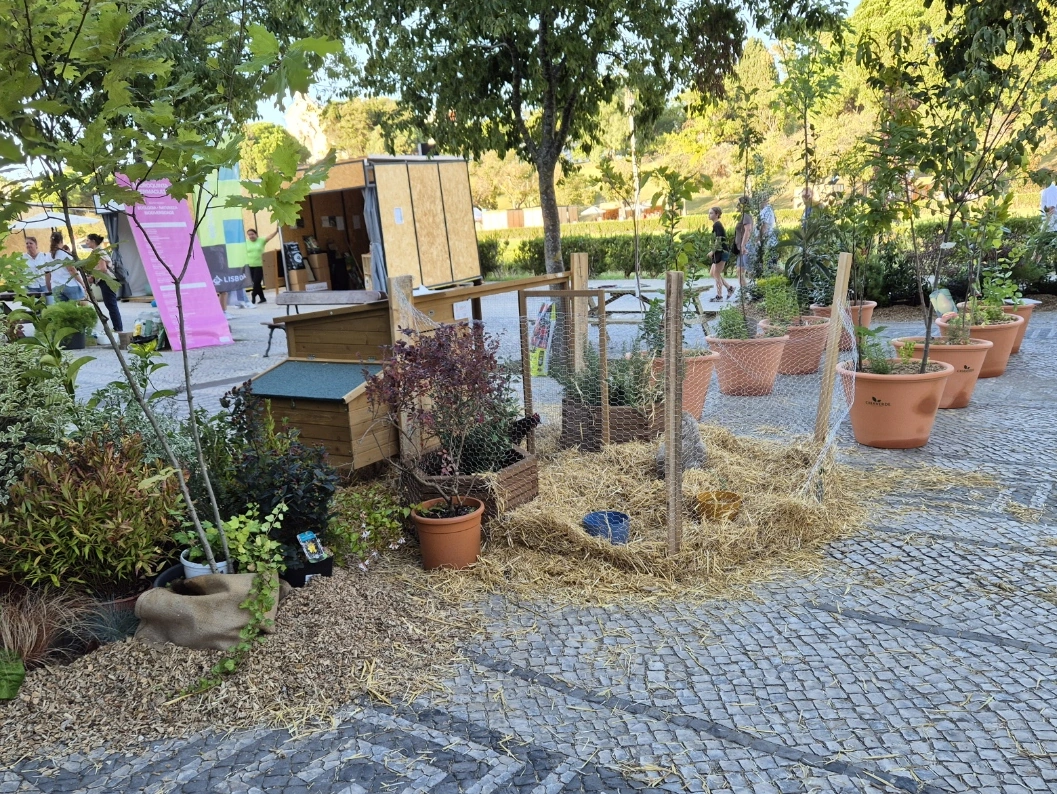
Not everything we found was quite what we expected.
One of the surprises was the range of ideas around urban growing — including a small chicken coop.
And, to be fair, it is always fun to come across chickens. Even more so when they seem perfectly content in the middle of Parque Eduardo VII.
Beyond the novelty, though, urban gardens also help show that circularity is about much more than recycling packaging or choosing products made from recovered materials.
It can also mean rethinking how we produce food, how we use urban space and how close we are to the things we consume.
Less waste, fewer kilometres
Food also had a significant presence at Cidade do Zero.
There were several projects exploring ways to reduce food waste, shorten supply chains and bring producers and consumers closer together. Examples include Quinta do Arneiro, which grows and delivers produce boxes directly to consumers, and HortasLx, which brings food production closer to people living in the city.
We also stopped by the EPAL stand.
Unexpected? Perhaps at first. But promoting good-quality tap water makes perfect sense in this context. Drinking water from the tap can mean fewer disposable bottles, less packaging and less transport associated with bottled water.
It is an especially interesting example because it shows that some solutions to reducing waste already exist all around us. They do not necessarily require a new product or a major investment.
Sometimes, they simply require a change of habit.
We also learned how to make kombucha
Among the activities taking place throughout the event, we joined a workshop on how to make kombucha.
It is exactly this kind of practical element that helps prevent an event about sustainability from remaining purely theoretical.
We can talk about circularity, conscious consumption or waste reduction for hours. But seeing something being done, trying it ourselves and learning how it works makes those ideas much more tangible.
And perhaps that is where Cidade do Zero works best: when concepts that can sometimes feel abstract become small, practical choices in everyday life.
A setting worthy of the event
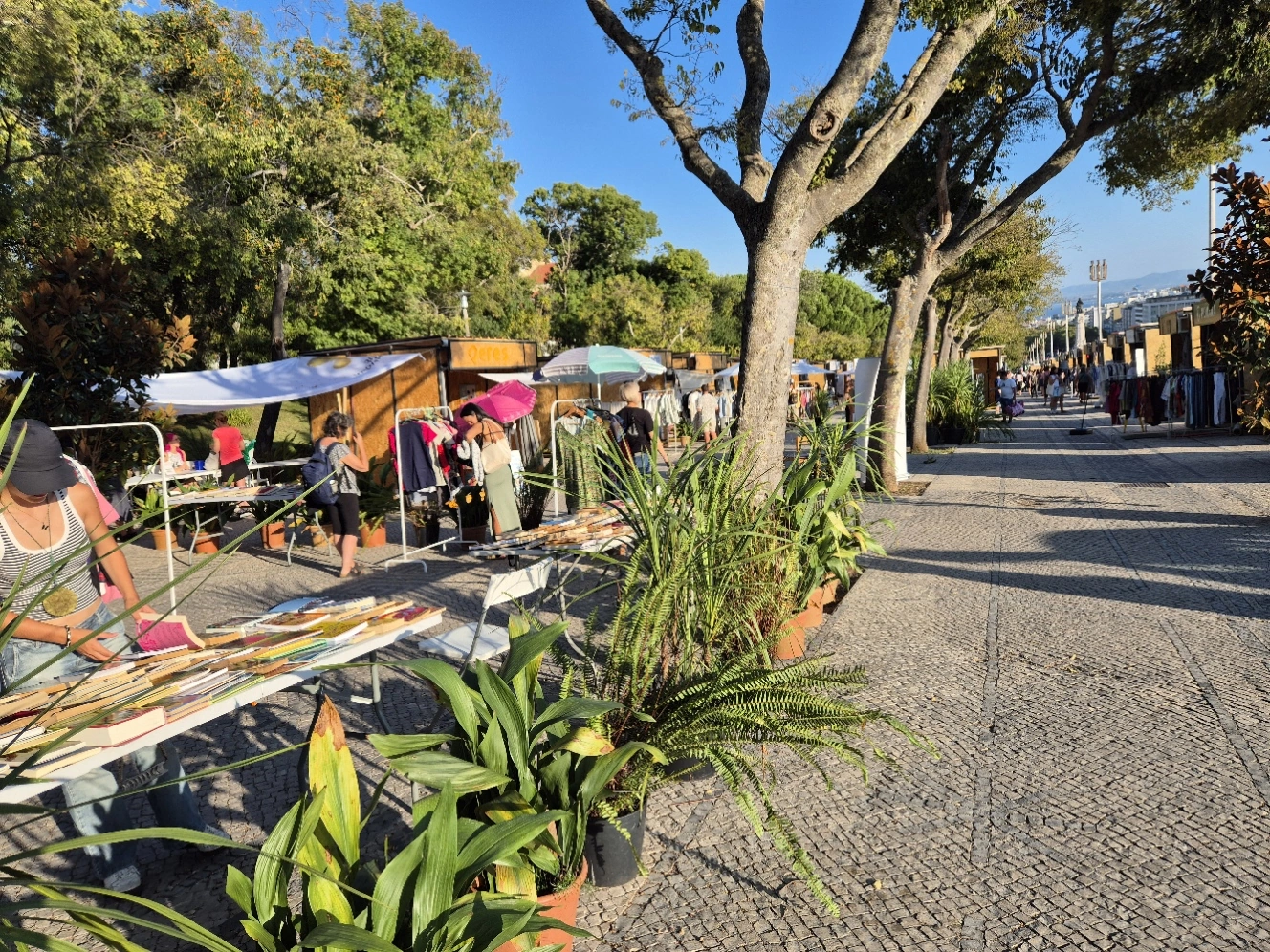
Parque Eduardo VII deserves a mention too.
Central, prominent and unmistakably part of Lisbon, it felt like an appropriate setting for an event asking us to think about what the cities of the future might look like.
Over the course of two days, the park brought together brands, associations, workshops, talks, food, repairs, swaps, urban growing and plenty of curious visitors.
Attendance certainly seemed strong to us.
And, we suspect, there might have been even more people on a cooler weekend. With the temperatures Lisbon had over those two days, the beach was difficult competition.
Circularity is about more than consuming better
We left Cidade do Zero with one idea reinforced.
When we talk about sustainability, it is easy to focus on products: better materials, local production, different packaging or more responsible brands.
All of that matters.
But a more circular city cannot be built through better products alone.
It is also built through clothes changing hands, objects being repaired, food travelling fewer kilometres, tap water, urban gardens, shared knowledge and spaces where people can meet.
Perhaps that is what makes these solutions particularly interesting.
Ultimately, circularity is also about building cities where we make better use of what we already have — and where we are a little closer to one another.