Sustainable living in Portugal
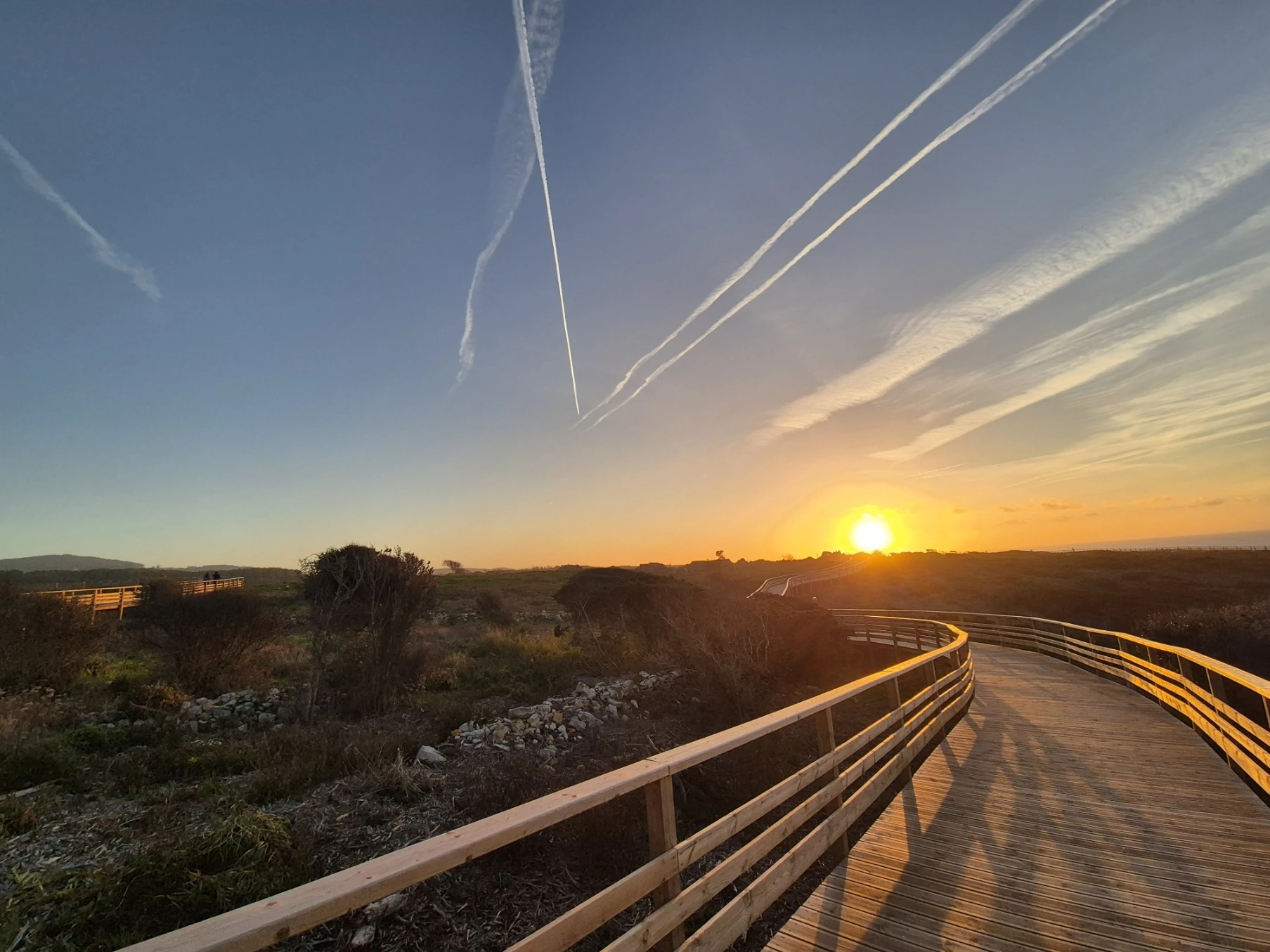
Ecological Park of Adraga and Praia Grande: Nature, Dinosaurs and Coastal Walks

I had explored this stretch of coastline several times before. The area between Praia da Adraga and Praia Grande is one of those places I keep coming back to. There is something about its rugged landscape, the cliffs, the vegetation and the Atlantic Ocean that makes it difficult to get tired of it.
During my last visit, back in February, I noticed some new structures taking shape across the landscape. Wooden walkways, viewing platforms and paths were being built, and I started wondering what was happening. I later heard about the opening of the Ecological Park of Adraga and Praia Grande, so I decided it was time to return and explore it properly.
I have to admit that I am usually drawn to places that feel untouched by human intervention. I like wild landscapes, natural trails and the feeling of discovering somewhere without too many structures around. But after visiting the park, I have to recognise the advantages of what has been built here.
Exploring the Coastal Walkways
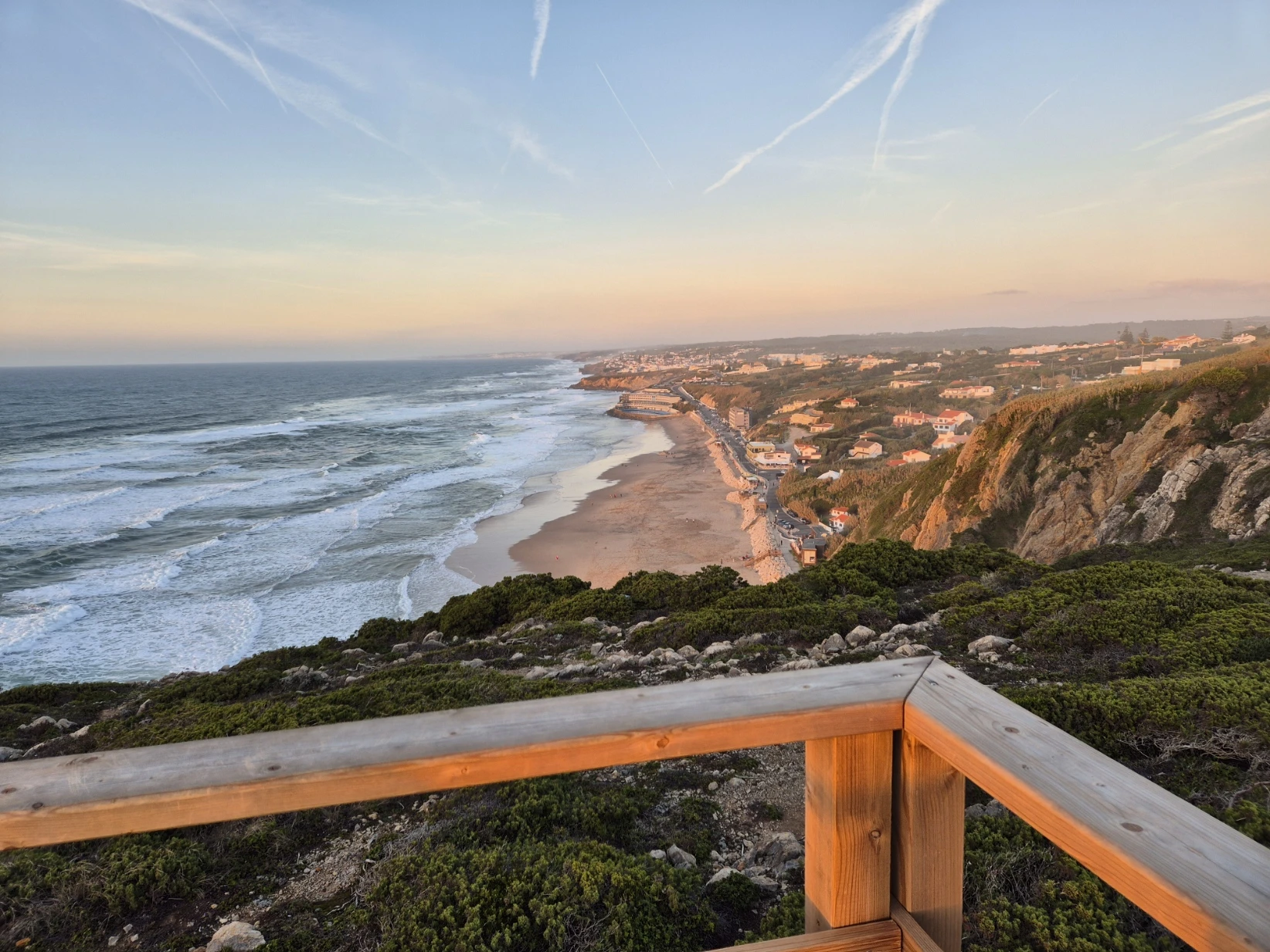
The wooden walkways are probably the most noticeable feature of the park. At first, I was slightly sceptical. Another coastal area with boardwalks? Wouldn’t that take away some of the charm?
But there is another side to the story.
These structures make an otherwise difficult landscape accessible to a much wider range of people. Families with pushchairs, wheelchair users and people with reduced mobility can now enjoy areas that would previously have been difficult, or even impossible, to reach.
And accessibility is only part of the benefit. The walkways also help protect the landscape itself.
Before their construction, visitors often created informal paths through the vegetation. Over time, this constant foot traffic damaged fragile habitats, disturbed native plants and contributed to soil erosion, particularly close to the cliffs. By guiding people along designated routes, the park reduces this pressure and gives nature a chance to recover.
It is an interesting balance: allowing more people to experience nature while reducing the impact they have on it. Perhaps this is what responsible tourism should look like.
The Natural Heritage of Adraga and Praia Grande
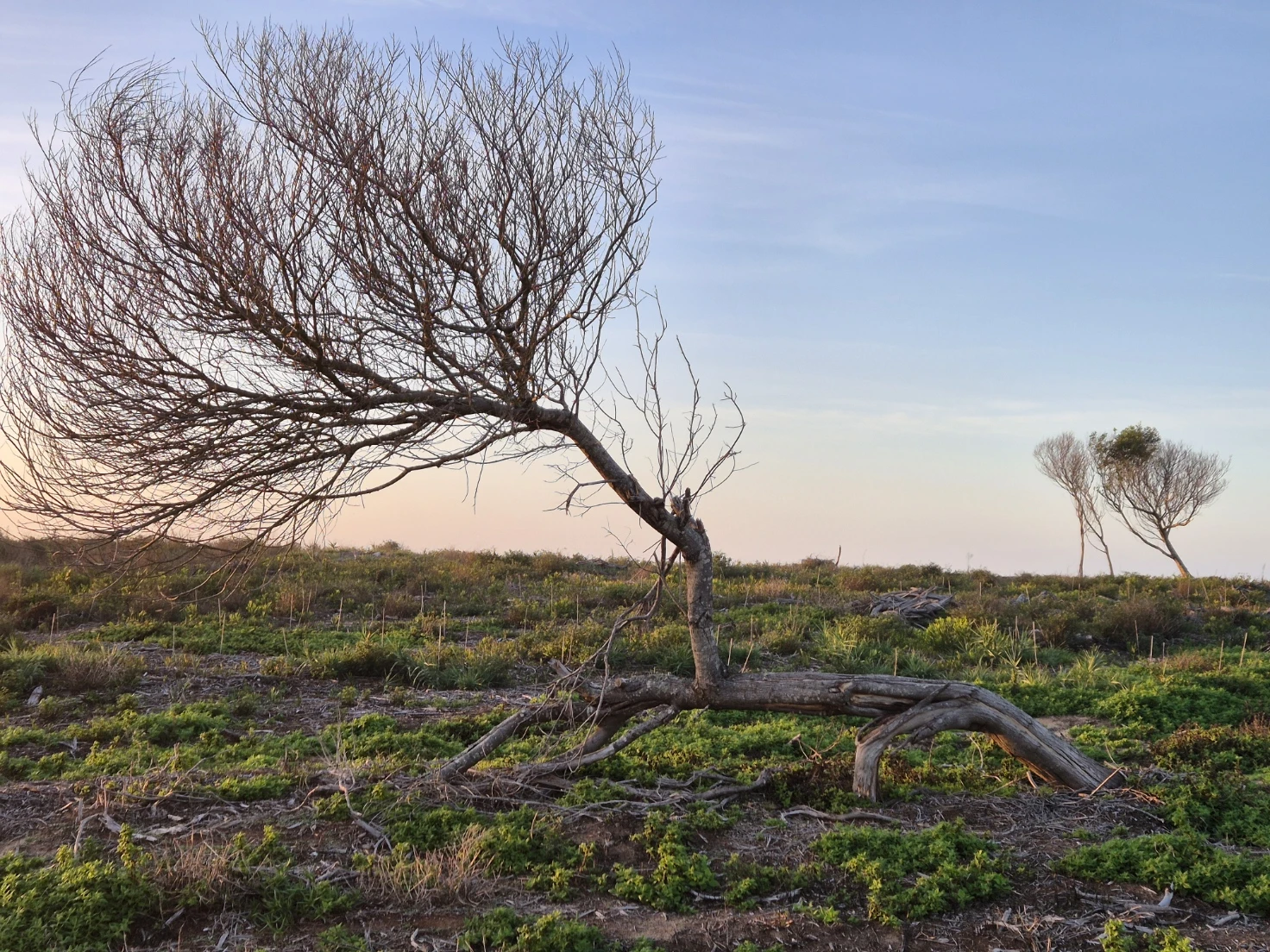
The Ecological Park of Adraga and Praia Grande is much more than a collection of walking trails with beautiful views. It is part of the Sintra-Cascais Natural Park and belongs to the Natura 2000 network, reflecting the ecological importance of this coastal territory.
The restoration work has focused on recovering natural habitats, controlling invasive species and encouraging native vegetation to return. Species such as the invasive Australian acacia and the ice plant (known locally as chorão-das-praias) had spread across parts of the area, putting pressure on the local ecosystems.
The results of this work are particularly interesting because the landscape is far from uniform. As you walk through the park, you move between different habitats, including coastal dunes, juniper formations, pine forests and Mediterranean scrubland.
In fact, the park is home to 14 natural habitats, six of which are considered priority habitats under the European Habitats Directive. Around 199 plant species have been recorded in the area.
One of the most interesting native plants is the camarinha (Corema album), a small coastal shrub that produces white berries. There is also the Armeria welwitschii, a plant adapted to the demanding conditions of coastal dunes.
It is easy to walk through a landscape like this without noticing how much is happening around us. But once you start paying attention, you realise that every patch of vegetation has a role to play.
Visiting with Children
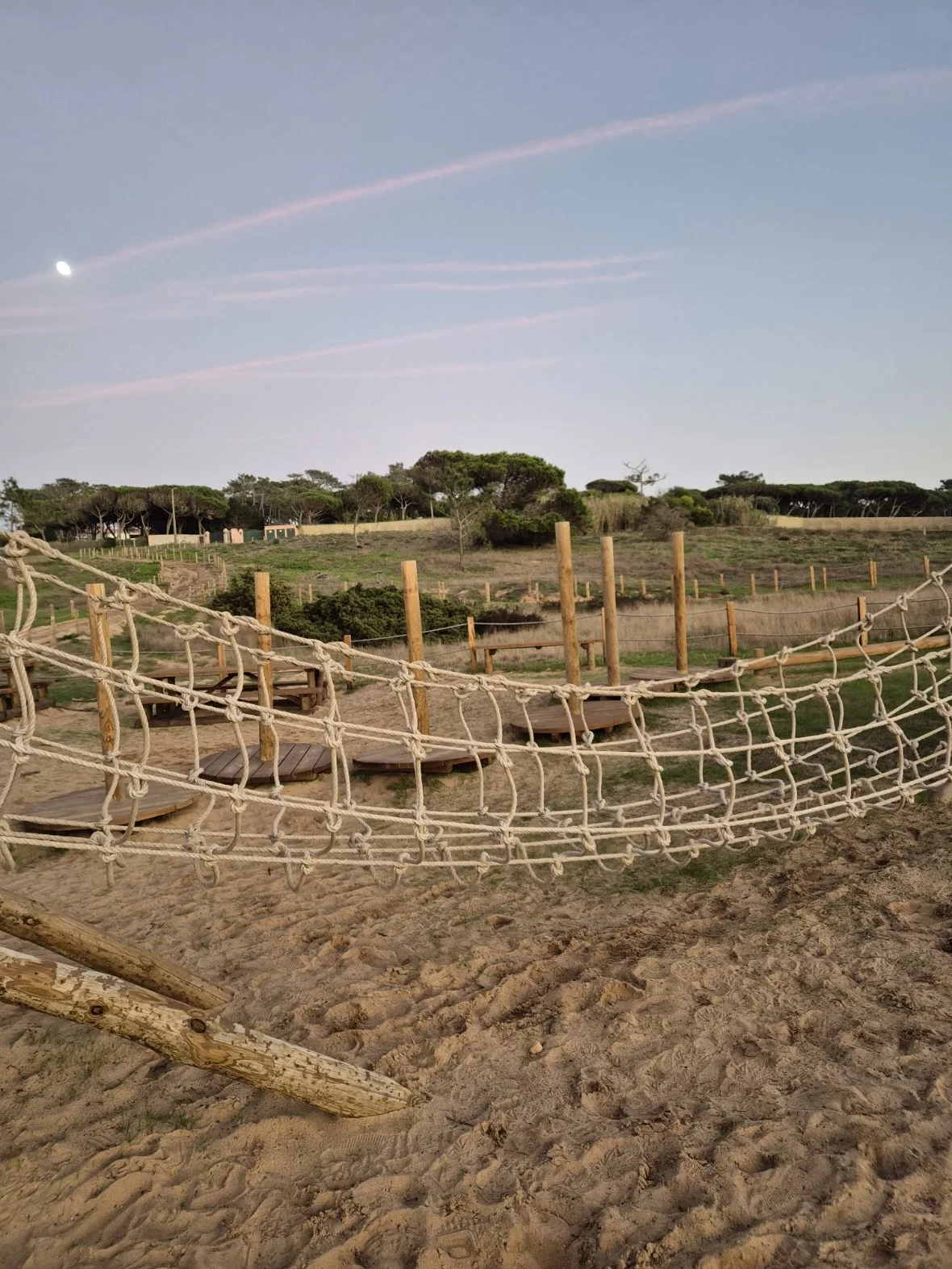
The park is also a great destination for families. And not just because of the views or the opportunity to spend some time outdoors.
There is something particularly valuable about bringing children into a landscape like this. Instead of simply walking along a path, they can discover different environments, observe plants, look for birds and learn why certain areas need to be protected.
The designated leisure areas offer places to stop, take a break and enjoy the surroundings. The interpretive panels scattered along the trails also make the visit more engaging, turning a simple walk into an opportunity to learn about the natural world.
I particularly like the idea of a place where children can learn about biodiversity without feeling that they are in a classroom. Sometimes, the best way to understand nature is simply to spend time in it.
And, of course, there is one detail that is likely to capture their imagination more than anything else: dinosaurs.
Discovering the Dinosaur Footprints at Praia Grande
One of the most fascinating features of this area is its palaeontological heritage.
At Praia Grande, dinosaur footprints have been preserved in the limestone cliffs for around 125 million years. These are not just a few isolated marks in the rock. They are evidence of animals that once walked across a landscape that looked completely different from the one we know today.
The site contains footprints attributed to different groups of dinosaurs, including theropods, sauropods and ornithopods.
Think about that for a moment. Long before the Sintra mountains existed in their current form, dinosaurs were moving through this region. Their footprints were left behind and, through an extraordinary combination of geological processes, survived until today.
There is something quite humbling about standing in front of these traces. We tend to think of history in terms of centuries or perhaps a few thousand years. Here, we are confronted with a completely different scale of time.
The Dinosaur Footprints Trail makes this heritage one of the park’s points of interest, connecting the natural landscape with a much older story of the region.
Why is the Ecological Park of Adraga and Praia Grande a sustainable destination?
Nature and wellbeing: The Ecological Park of Adraga and Praia Grande offers a wonderful opportunity to reconnect with nature. Walking along its trails, breathing fresh Atlantic air and spending time outdoors can benefit both physical and mental wellbeing.
Protected natural environment: Located within the Sintra-Cascais Natural Park and the Natura 2000 network, this coastal area is protected for its ecological importance. Ongoing conservation and restoration projects help preserve native vegetation, restore natural habitats and protect biodiversity.
Accessible and responsible tourism: The wooden walkways make exploring the park easier for families with pushchairs and visitors with reduced mobility. At the same time, they guide foot traffic away from fragile vegetation, helping reduce soil erosion and damage to natural habitats.
Space without the crowds: Even when the car park is relatively busy, the extensive network of walking trails and wooden boardwalks helps distribute visitors across the park. You can explore the coastline without constantly feeling surrounded by crowds.
An alternative to crowded coastal destinations: Away from some of Portugal’s more heavily visited tourist attractions, this is a refreshing alternative for anyone looking for outdoor activities, nature walks and authentic coastal landscapes near Sintra.
Where to Watch the Sunset in Adraga and Praia Grande
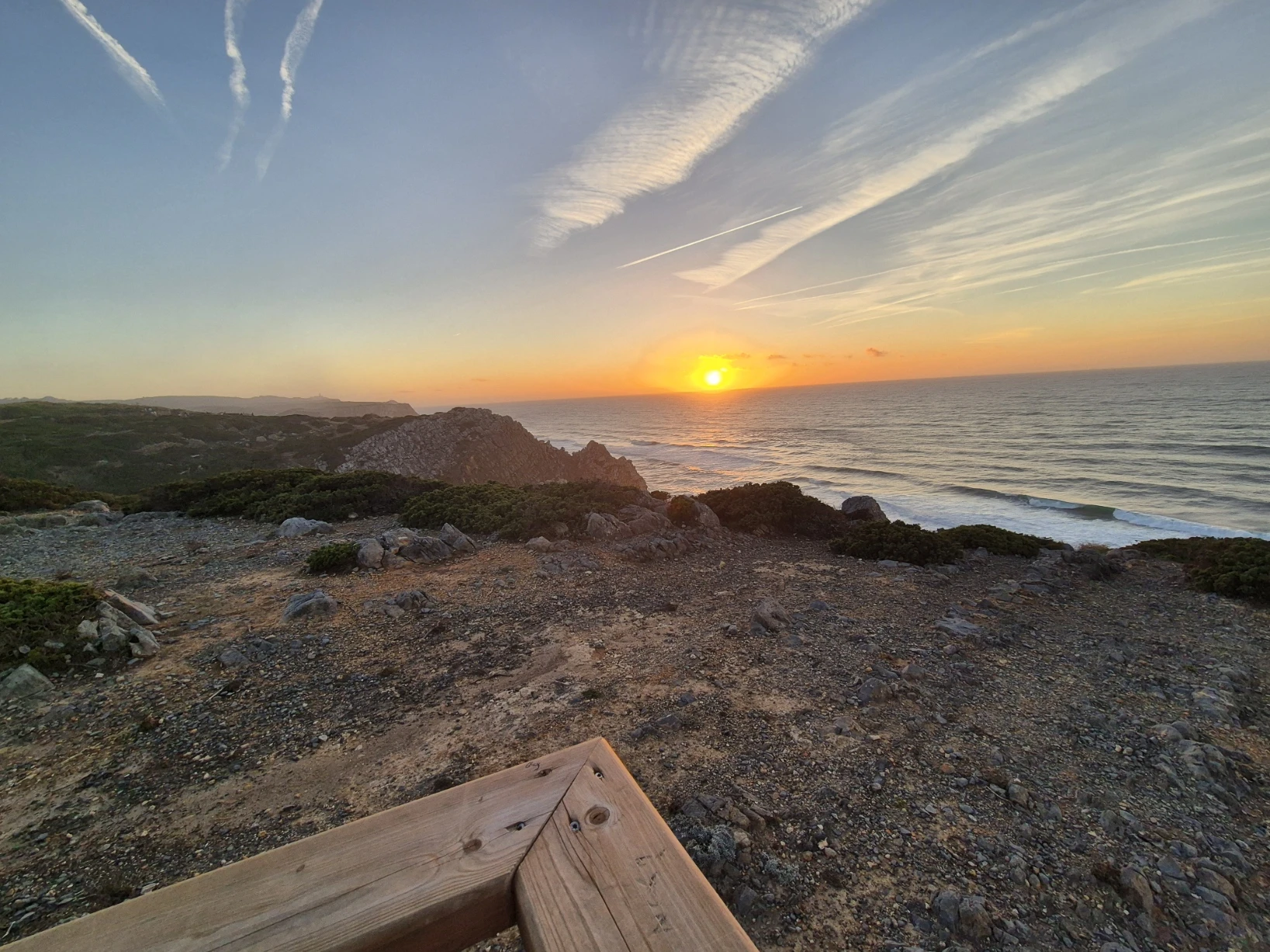
There is one more reason to visit this park, and perhaps one of the best: the views.
The elevated viewpoints offer different perspectives over this extraordinary stretch of coastline. To one side, Praia Grande and its long sandy beach. To the other, the dramatic landscape surrounding Praia da Adraga. In between, the cliffs, the vegetation and the endless Atlantic horizon.
And when the day starts to come to an end, the whole place takes on a different atmosphere.
The park is an excellent spot to watch the sunset. There are several viewpoints from which to stop, sit for a while and simply watch the sun disappear into the Atlantic.
I would definitely recommend timing a visit for the late afternoon. Walk the trails, take your time, explore the different habitats and leave the best part for last.
I still believe there is something special about discovering a natural landscape without too much human intervention. But perhaps the real challenge is not to keep people away from nature. It is to find better ways of bringing them closer to it, without destroying what makes it special in the first place.
And this park is a pretty good example of how that can be done.
A little side quest: Praia da Adraga
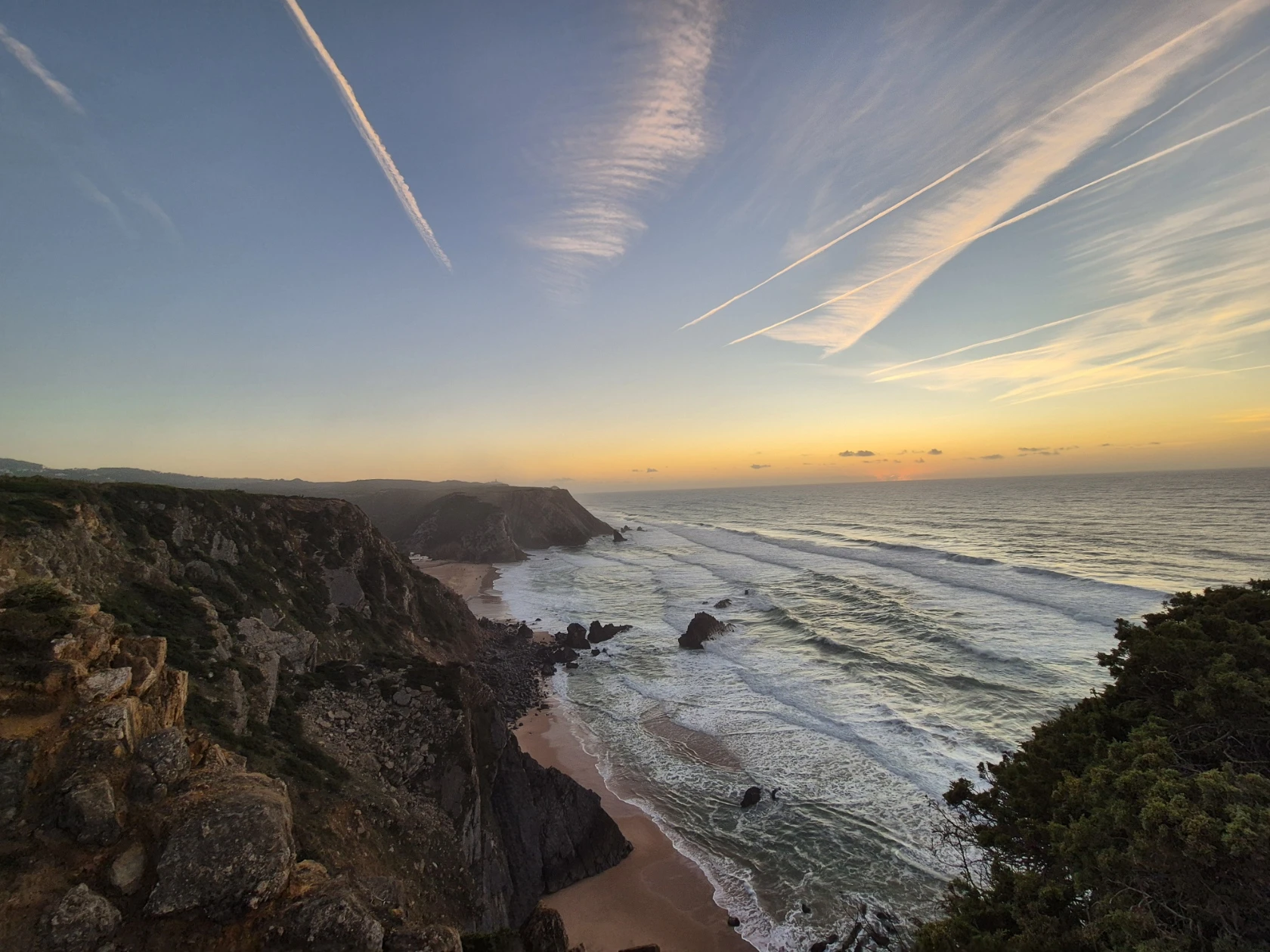
If you feel like extending your visit, there is a little side quest worth taking. At the end of one of the park’s paths, you can make your way down towards Praia da Adraga.
As seems to be becoming a bit of a habit with my other guides, I ended up doing this towards the end of the day, just as daylight was beginning to fade. What started as a small detour turned into a slightly more adventurous experience, with the approaching nightfall adding an unexpected extra layer to the whole thing. I actually had to come back the following day to take the beach photographs. Not the worst excuse to revisit somewhere I love, I suppose!
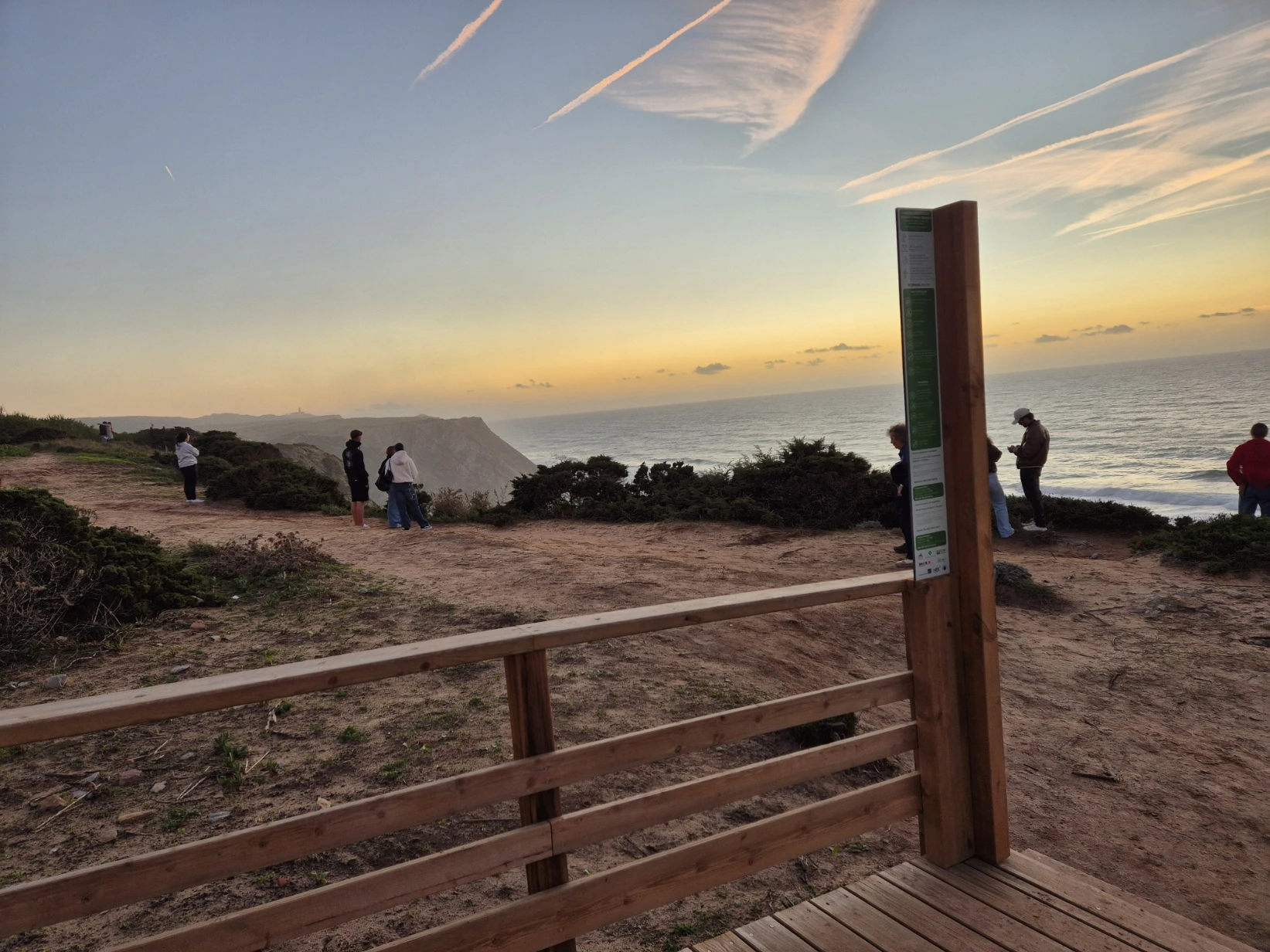
The route starts across rocky terrain. Along the way, keep an eye on the horizon: in the distance, you can spot the lighthouse at Cabo da Roca, standing proudly above the Atlantic coastline. You will find markings. At a certain point you will do a left turn entering a a small pine forest.
As you leave the trees behind, the path changes once again, eventually turning into a sandy trail that winds its way downhill towards the beach. There is even a little creek to cross, which requires a small jump. Nothing particularly challenging, but enough to make the whole thing feel like a mini-adventure.
And then, almost as a reward, there it is: Praia da Adraga.
It is one of those beaches that makes you stop for a moment. Surrounded by imposing cliffs and scattered with dark rock formations, it has a wilder character than many of the more familiar beaches along the Lisbon coast. The Atlantic is usually anything but discreet here, and the waves crashing against the shore are a reminder of just how powerful this coastline can be.
Take some time to walk along the sand, explore the rock formations from a safe distance or simply sit and watch the ocean. If you are lucky enough to have good weather, you might find yourself staying longer than originally planned.
And before heading back, why not stop for a coffee? There is something particularly satisfying about ending a walk by the sea with a coffee in hand, especially when the setting is as beautiful as this one.
It is not a major expedition, nor does it require any special preparation. Just a small detour that adds another dimension to the visit. Sometimes, these unplanned little adventures end up being the best part of the day.