Moving to Portugal is an exciting adventure. From its beautiful coastline and charming villages to its relaxed lifestyle and mild climate, it’s no surprise that thousands of expats choose to call Portugal home every year.
If you’re also looking to live more sustainably, Portugal offers plenty of opportunities to reduce your environmental impact without sacrificing comfort. Whether you’re settling in Lisbon, Porto, the Algarve, or a smaller town, sustainable living is often easier than you might think.
Here’s everything you need to know to get started.
Why Portugal Is a Great Place for Sustainable Living
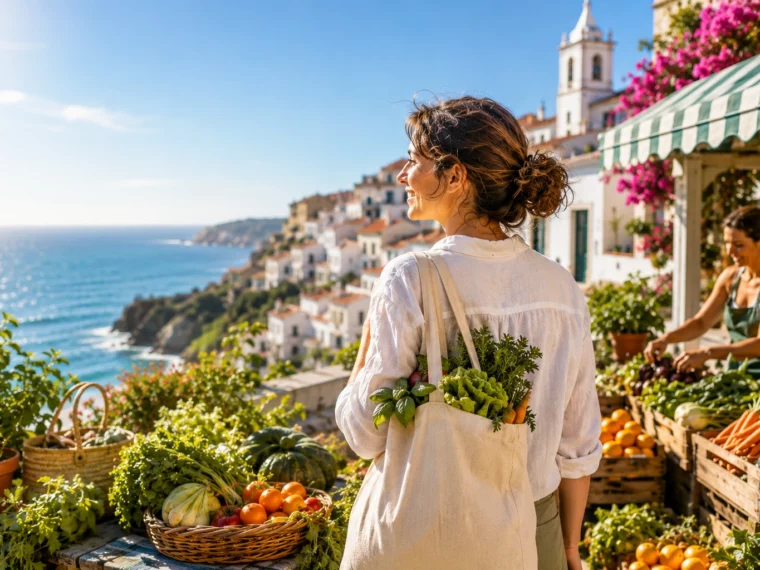
Portugal has made significant progress towards sustainability over the past decade. Renewable energy, recycling initiatives and eco-conscious businesses are becoming increasingly common throughout the country. In addition you still can find local food markets and local producers with season high quality food.
Many Portuguese communities still embrace traditional habits that naturally support a more sustainable lifestyle:
- Shopping at local markets. There are plenty of markets, many of them with small producers.
- Buying seasonal produce. Portugal is a Mediterranean country, with a climate that allows for very varieds vegetables and fruits over the year.
- Walking to nearby shops
- Repairing instead of replacing
- Supporting family-owned businesses
As an expat, adopting these habits can help you integrate into local culture while reducing your environmental footprint.
1. Shop Local Whenever Possible
One of the easiest ways to live sustainably is to buy from local producers.
Instead of relying exclusively on large supermarkets, explore:
- Farmers’ markets (These Mercados Municipais)
- Independent bakeries
- Local fishmongers
- Butchers
- Fruit and vegetable shops
- Artisan food producers
Shopping locally reduces transportation emissions while supporting Portuguese small businesses.
You’ll also discover fresher, seasonal products that often taste better than imported alternatives.
Quick Guide to Local Markets in Portugal
Lisbon
- Mercado da Ribeira — Municipal market — Daily
- Mercado de Benfica — Municipal market — Tuesday & Saturday
- Príncipe Real Organic Market — Farmers’ market — Saturday
- Feira do Relógio — Weekly fair — Sunday
Cascais
- Mercado da Vila — Municipal market — Daily (Wednesday & Saturday busiest)
- Carcavelos (Cascais)
- Feira de Carcavelos — Weekly fair (fruit, vegetables, clothing & local products) — Thursday
Oeiras
- Mercado Municipal de Oeiras — Municipal market — Tuesday–Sunday
- Algés (Oeiras)
- Mercado Agrobio — Organic farmers’ market — Saturday
Sintra
- Mercado Municipal da Estefânia — Municipal market — Daily
Ericeira
- Mercado Municipal da Ericeira — Municipal market — Daily
- Feira da Ericeira — Weekly fair — Tuesday
Peniche
- Mercado Municipal de Peniche — Municipal market — Monday–Saturday
- Feira de Peniche — Weekly fair — Wednesday
Porto
- Mercado do Bolhão — Historic municipal market — Monday–Saturday
- Parque da Cidade Organic Market — Farmers’ market — Saturday
Braga
- Mercado Municipal de Braga — Municipal market — Daily
Coimbra
- Mercado Municipal D. Pedro V — Municipal market — Monday–Saturday
Setúbal
- Mercado do Livramento — Municipal market — Tuesday–Sunday
Caldas da Rainha
- Praça da Fruta — Outdoor fruit & vegetable market — Daily
Loulé
- Mercado Municipal de Loulé — Municipal market — Monday–Saturday
- Loulé Saturday Market — Traditional weekly fair — Saturday
Almancil / Quarteira
- Quarteira Gypsy Market — Weekly fair — Wednesday
Faro
- Mercado Municipal — Municipal market — Monday–Saturday
- Mercado de Estoi — Traditional monthly market — Second Sunday of each month
Olhão
- Mercados de Olhão — Municipal fish & farmers’ market — Monday–Saturday
Lagos
- Mercado Municipal de Lagos — Municipal market — Monday–Saturday
- Levante Lagos Market — Weekly producers’ market — Saturday
Portimão
- Mercado Municipal — Municipal market — Monday–Saturday
Albufeira
- Mercado Municipal dos Caliços — Municipal market — Tuesday–Sunday
2. Choose Seasonal Food
Portugal enjoys a mild climate that produces fresh fruit and vegetables throughout the year.
Eating seasonally means:
- Lower carbon emissions
- Better flavour
- Lower prices
- Less packaging
Some typical seasonal foods include:
Spring: asparagus, peas, broad beans, artichokes, lettuce, spinach, spring onions, green garlic, radishes, new potatoes, strawberries, cherries and loquats.
Summer: tomatoes, peppers, cucumbers, courgettes, aubergines, green beans, sweet corn, okra, chillies, peaches, nectarines, apricots, plums, cherries, figs, watermelon and melons.
Autumn: pumpkins, sweet potatoes, mushrooms, cauliflower, leeks, celery, Swiss chard, grapes, apples, pears, persimmons, pomegranates, quinces and chestnuts.
Winter: cabbage, kale (couve portuguesa), broccoli, cauliflower, Brussels sprouts, turnips, turnip greens (grelos), carrots, beetroot, leeks, onions, garlic, parsnips, oranges, mandarins, clementines, lemons and kiwis.
3. Reduce Plastic Waste
Although many supermarkets still use plastic packaging, reducing waste is becoming easier.
Simple swaps include:
- Carry reusable shopping bags. In Portugal you pay for bags in the supermarket. This was implemented as a incentive to bring your own bag.
- Use a reusable coffee cup
- Bring your own water bottle
- Buy loose fruit and vegetables
- Store food in glass containers
Tap water in Portugal is safe to drink and is the most sustainable option. If you prefer bottled water, all major supermarkets sell large bottles, typically ranging from 5 to 7 litres, making them a more economical and lower-waste choice than buying multiple small bottles.
Some supermarkets also offer refillable bottled water systems, allowing customers to reuse large water containers instead of buying new ones each time. However, these systems are not available everywhere.
Across Portugal, you’ll also find many public drinking fountains (fontes or chafarizes). In many smaller towns and rural areas, many of these public drinking fountains are sourced from natural spring water. It’s common for local residents to fill reusable containers there. Where a spring is not certified as potable, look for signs indicating whether the water is safe to drink. Ask the locals.
Many Portuguese cities now have refill stores where you can purchase household products without single-use packaging.
4. Learn the Recycling System
Portugal has an accessible recycling system, but the coloured bins can confuse newcomers.
Here’s a quick guide:
🟦 Blue Bin
Paper and cardboard
🟨 Yellow Bin
Plastic and metal packaging. Tetrapak (milk, juice, etc) packages go into yellow in Portugal.
🟩 Green Bin
Glass bottles and jars
🟫 Brown Bin
Organic waste (available in some municipalities).
Note: In some municipalities such as Cascais and Oeiras, residents are provided with special bags for collecting organic waste. Once filled, these bags can simply be placed in the general (undifferentiated) waste bin. The bags are then automatically separated and processed during waste collection.
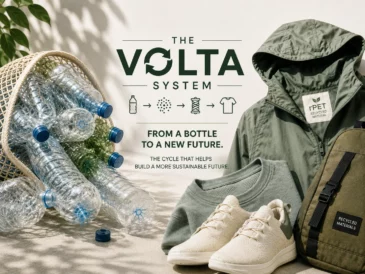
Plastic bottles up to 3 litres and aluminium cans are part of the Volta deposit return scheme. A 10-cent deposit is added when you purchase an eligible container and refunded when you return it to a designated return machine. Return machines are available at most major supermarkets. You can find the full list on where to return here.
You may already know the system: similar deposit return schemes are already in place in several European countries, including Germany, Sweden, Norway, Denmark, Finland and the Netherlands, among others
Understanding local recycling rules helps ensure materials are processed correctly.
5. Use Public Transport
Portugal has an excellent public transport network in major cities.
Options include:
- Metro
- Trains
- Buses
- Trams
- Ferries
Lisbon and Porto also have growing cycling infrastructure, while many smaller towns are highly walkable.
Choosing public transport instead of driving significantly reduces your carbon footprint.
Intercity transport in detail.
There are two major bus carriers to transport city to city. Rede-expressos and flix bus. These cover most of the country. There are smaller / regional ones complementing this service. These are rather inexpensive and, if bought in advance it’s possible to have really good deal.
With a more limited offer, but still covering Portugal north tou south you also have the trains system, operated by CP (Comboios de Portugal). These are slightly more expensive, but with higher level of confort if travelling in Alfa or Inter-city service.
Inside the city
Lisbon
Public Transport Tips
Getting around Lisbon without a car is easy. Think of Greater Lisbon as a hub, with the city at its centre and rail lines stretching out to the surrounding towns and cities.
Within Lisbon, you can travel using the metro, buses, trams, and suburban trains, making it easy to reach most attractions and neighbourhoods.
For planning your journeys, Google Maps and Citymapper are both reliable and provide accurate routes and real-time information for most buses, metro, tram, and train services in the Lisbon region. (There isn’t yet a single transport planner, like 9292 in the Netherlands Google maps and Citymapper are your best options)
Four main railway lines connect Lisbon to popular destinations:
- Linha de Cascais – for beaches and the coastal towns of Cascais and Estoril.
- Linha de Sintra – for Sintra and its famous palaces.
- Linha da Azambuja – serving towns to the north-east of Lisbon.
- Linha do Sul (via the 25 de Abril Bridge) – connecting Lisbon with Setúbal and other destinations south of the Tagus River.
Handy Tips
- Use your bank card. On the Lisbon Metro, you can simply tap your contactless bank card to enter and exit the system.
- Keep your transport card. If you buy a reusable Navegante card from a ticket machine, don’t throw it away. It can be topped up and used again, helping to reduce plastic waste.
- Choose public transport whenever possible. It’s one of the most affordable and environmentally friendly ways to explore Portugal.
6. Support Sustainable Portuguese Brands
Portugal has a thriving community of sustainable businesses producing everything from clothing to skincare.
Look for brands that:
- Manufacture locally
- Use natural or recycled materials
- Produce in small batches
- Offer transparent supply chains
A few guides you may find interesting:
- Portuguese Bikini & Swimwear Brands: A Sustainable Guide
- Discover the sustainable fashion shops in Lisbon
- Circular Fashion in Portugal: 5 Sustainable Brands That Turned Ocean Plastic and RPET into Design
Buying locally made products often supports ethical production while reducing transport emissions.
7. Buy Second-Hand
Second-hand shopping is becoming increasingly popular across Portugal.
You’ll find:
- Vintage boutiques and second hand shops
- Charity shops
- Online marketplaces
- Clothing swap events
- Fairs and markets dedicated to second hand. There is plenty of offer.
Buying pre-loved items extends the life of products and helps reduce textile waste.
It can be great way to furnish a new home on a budget. But more than that, it’s also about the character of the furniture and decoration.
8. Save Energy at Home
Portugal’s sunny climate offers many opportunities to reduce energy consumption.
Easy ways to lower your household footprint include:
- Switching to LED bulbs
- Turning off appliances at the socket
- Using natural ventilation during summer
- Air-drying clothes
- Running washing machines on eco settings
These habits save both energy and money.
9. Conserve Water
Although Portugal has abundant rainfall in some regions, droughts are becoming more frequent, especially in the south.
Simple ways to reduce water use include:
- Taking shorter showers
- Installing water-saving showerheads
- Collecting rainwater for plants
- Running full dishwasher and washing machine loads
- Fixing leaks quickly
Every litre saved makes a difference.
10. Join Your Local Community
Sustainability isn’t just about reducing waste—it’s also about building stronger communities.
Many towns organise:
- Beach clean-ups
- Tree planting events
- Community gardens
- Repair cafés
- Local sustainability workshops
These activities are a great way to meet people while contributing to your local area.
Sustainable Living Doesn’t Have to Be Perfect
One of the biggest misconceptions about sustainability is that you need to change everything overnight.
In reality, sustainable living is about making better choices consistently rather than aiming for perfection.
Start with one or two simple habits:
- Carry a reusable bag.
- Buy local produce.
- Walk instead of driving.
- Support ethical businesses.
- Reduce food waste.
Small actions, repeated over time, create meaningful change.
Final Thoughts
Living sustainably in Portugal doesn’t require drastic lifestyle changes. In many ways, the country’s culture already encourages slower, more conscious living.
By embracing local markets, reducing waste, supporting Portuguese businesses, and making thoughtful everyday choices, you’ll not only lower your environmental impact but also experience a richer connection with your new home.
Whether you’ve just arrived or have lived in Portugal for years, every sustainable choice helps create a greener future—for both the country and the planet.