Sustainable living in Portugal
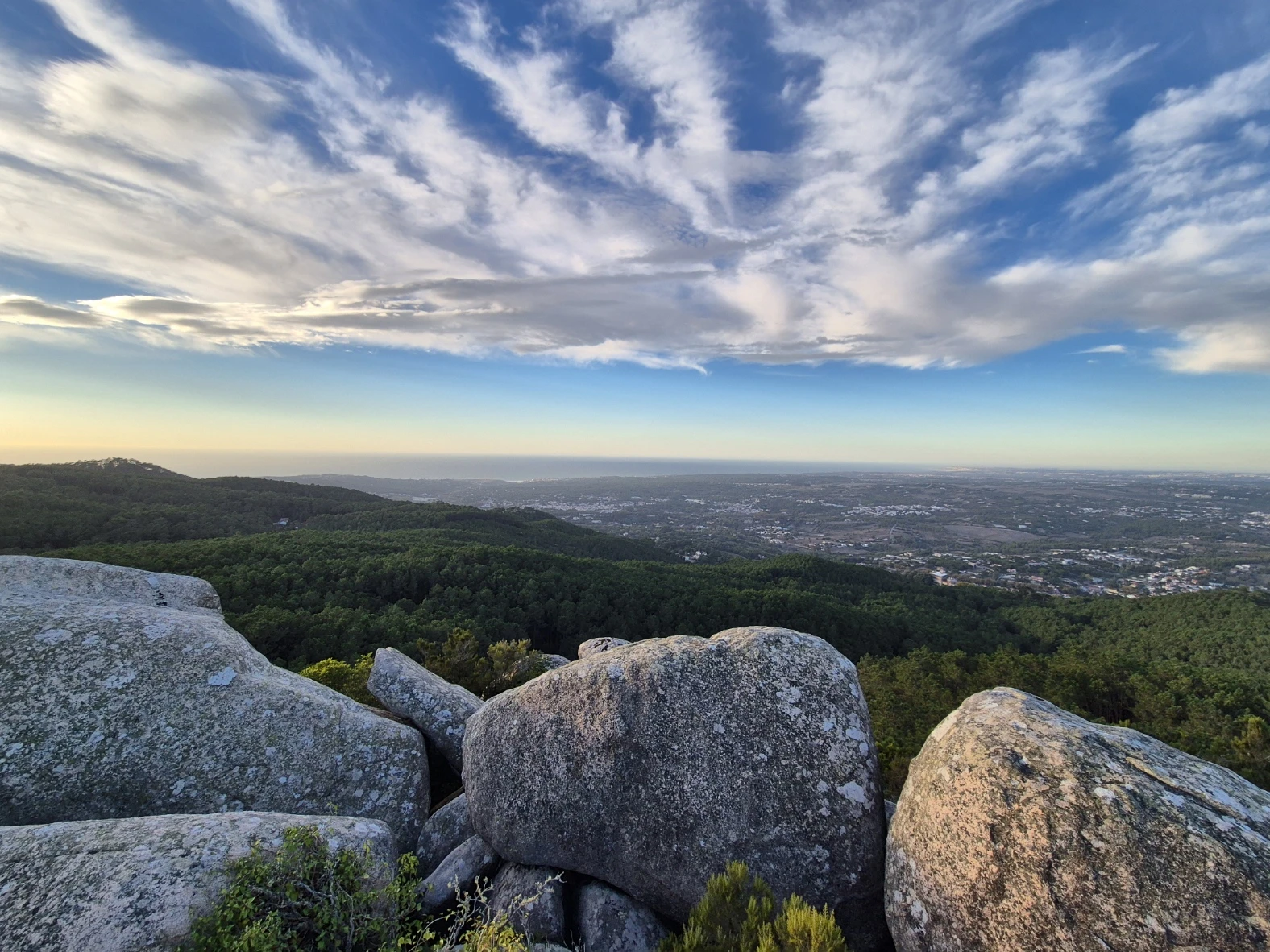
Tapada de Monserrate: Hiking off the beaten path in Sintra

I live near Sintra, have visited Monserrate more than once, and somehow had never walked into the forest next door.
That changed on a Sunday afternoon when I decided to explore Tapada de Monserrate.
We often think of exploring as something that requires a train ticket, a weekend away or a carefully planned itinerary. Sometimes it only requires an afternoon, a pair of comfortable shoes and a willingness to see where the path takes you.
Tapada de Monserrate turned out to be exactly that kind of place.
If you enjoy hiking, quiet places, getting away from the crowds and a little bit of adventure, it has all the right ingredients. And when I visited on a Sunday, I was surprised by how quiet it was.
For somewhere so close to one of Sintra’s most famous attractions, it felt remarkably removed from it all.
Location Main entrance next to the car park for Palácio de Monserrate (there are more entrances)
Coordinates 38.791069, -9.420103
Opening hours Always open
Trails and distance
There are three marked trails: green, blue and orange. The longest is 4.6 km, but the Tapada is extensive and hilly, so you can easily cover more ground if you explore beyond the marked routes. You can also adapt your walk to your own pace and interests.Personal advice
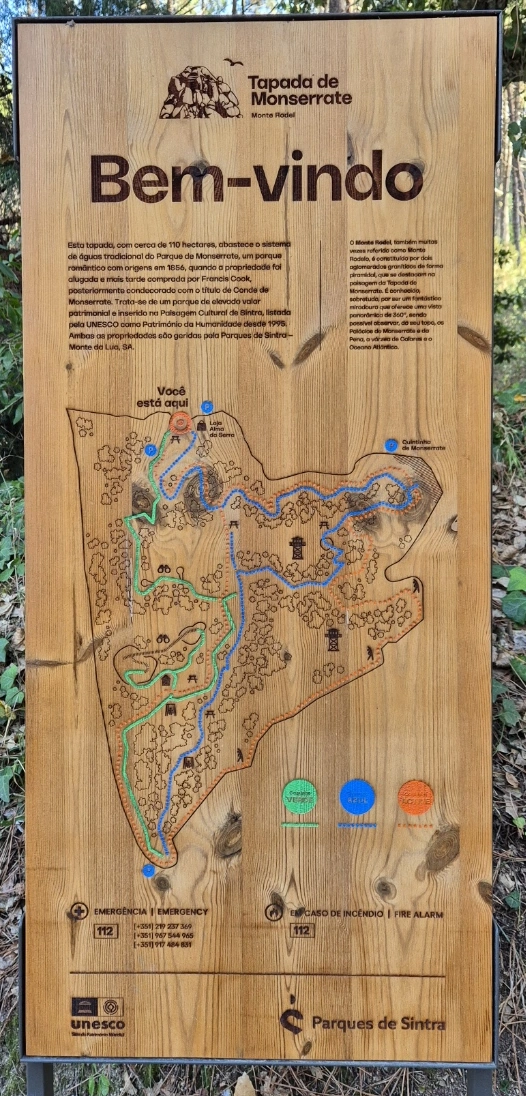
Take a photo of the map at the entrance — or use the map in this guide.
Trail markers are small and not always easy to spot, so it’s surprisingly easy to lose track of your route.
Wear comfortable walking shoes suitable for uneven, hilly terrain.
Bring a fully charged phone, and keep an eye on the time. Finding your way around becomes considerably harder as daylight fades.
Finding Tapada de Monserrate
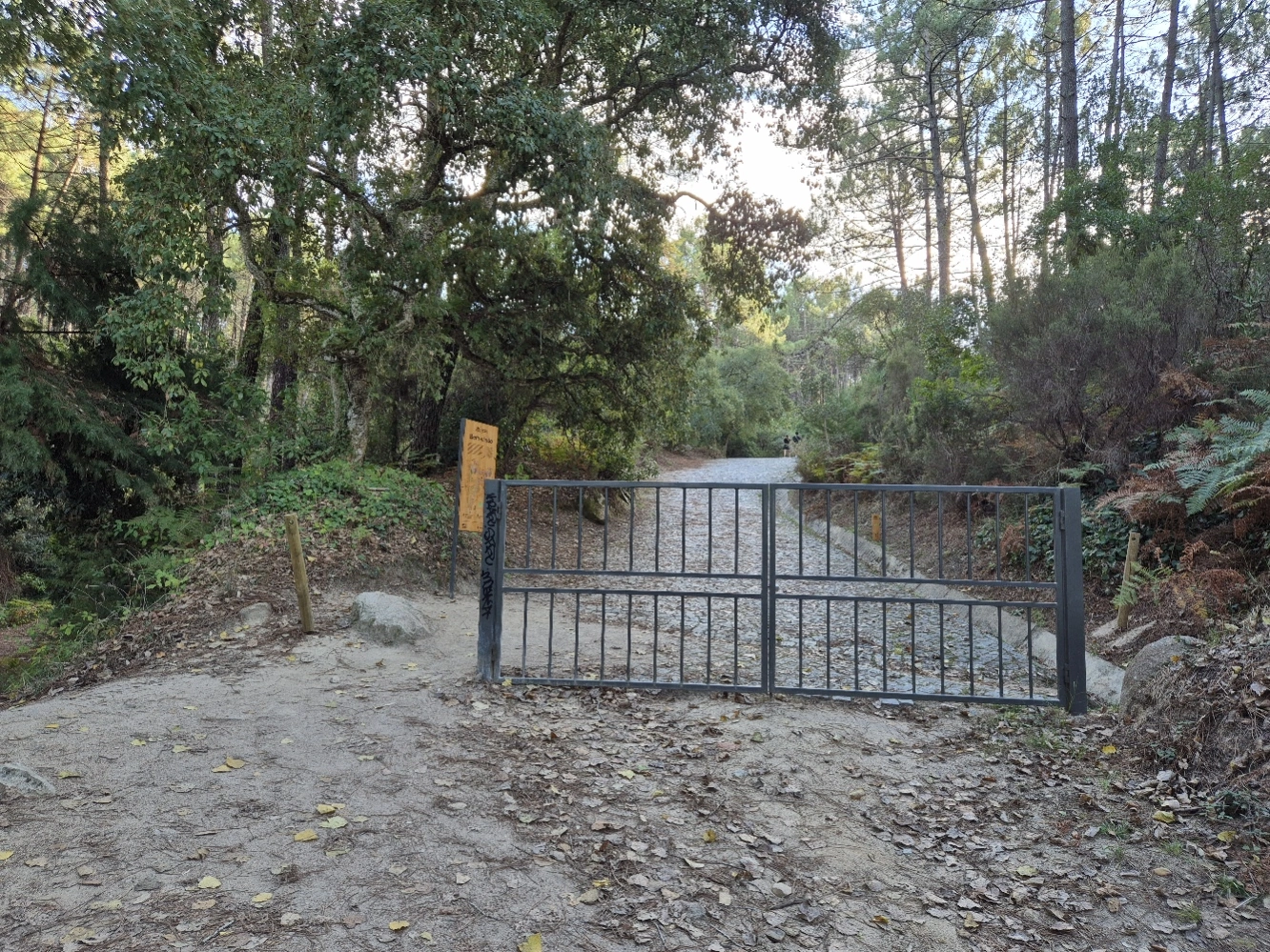
The entrance to the Tapada is next to the car park of the well-known Monserrate Palace. It is slightly hidden, so don’t expect a grand entrance announcing that you’ve arrived somewhere special.
In a way, that feels appropriate.
Once you leave the road behind, the atmosphere changes quickly. The tourist crowds and palaces of central Sintra give way to forest, winding paths and the occasional glimpse through the trees.
It is a very different way of experiencing Sintra.
Not ticking off another monument.
Just walking.
Three trails, one slightly questionable plan
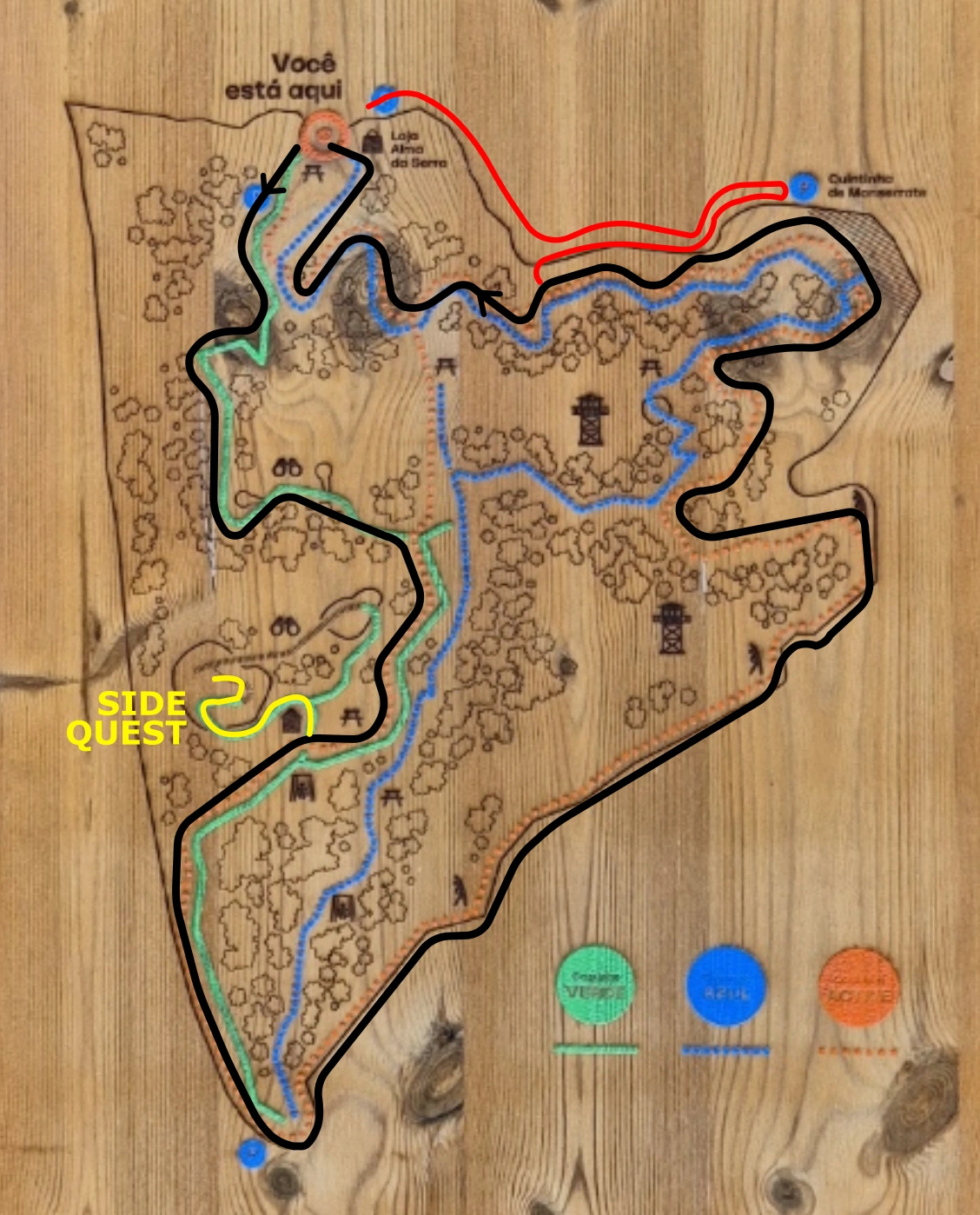
When I visited, the Tapada had three marked routes: green (2.2Km) , blue (3.3Km) and orange (4.6Km).
I had already made up my mind. I was going to do the orange route, the longest one. Note that neither the green nor the blue trail are circular. Account for the return walk if you decide to do these.
Simple enough. Except it wasn’t.
Before setting off, I’d recommend spending a little time looking at the map at the entrance. The trail markers are quite discreet — small and relatively few — which makes it surprisingly easy to end up following the wrong route.
Which, of course, is exactly what happened to me.
I started out intending to follow the orange route, but somewhere along the way, things took a different turn. I ended up combining sections of different trails and, at one point, decided to embark on a little side quest that turned out to be more challenging than expected.
If you have your heart set on completing a particular route, take a photo of the map before you leave and keep checking it along the way. Don’t rely entirely on the trail markers.
If you’re happy to explore without a strict plan, however, getting a little lost is not necessarily a bad thing. Sometimes, the unexpected detour becomes the most memorable part of the day.
A landscape with a long history
There is much more history here than you might expect from a forest walk.
The story of Monserrate goes back to the 16th century, when Friar Gaspar Preto established a hermitage dedicated to Nossa Senhora de Monserrate. After the 1755 earthquake, the estate passed through several owners and eventually attracted a number of British residents and visitors, including William Beckford.
In the 19th century, Francis Cook transformed Monserrate into the extraordinary estate we know today, bringing together architecture, gardens and plants from different parts of the world.
The result is the distinctive landscape surrounding Monserrate today — a place where nature and human intervention have been intertwined for centuries.
The wider cultural landscape of Sintra was recognised as a UNESCO World Heritage Site in 1995.
But you don’t need to know all of this while you’re walking.
In fact, one of the pleasures of exploring the Tapada is simply noticing the landscape: old trees, changing vegetation, stone structures and paths that make you wonder who walked them before you.
My route — and a little side quest
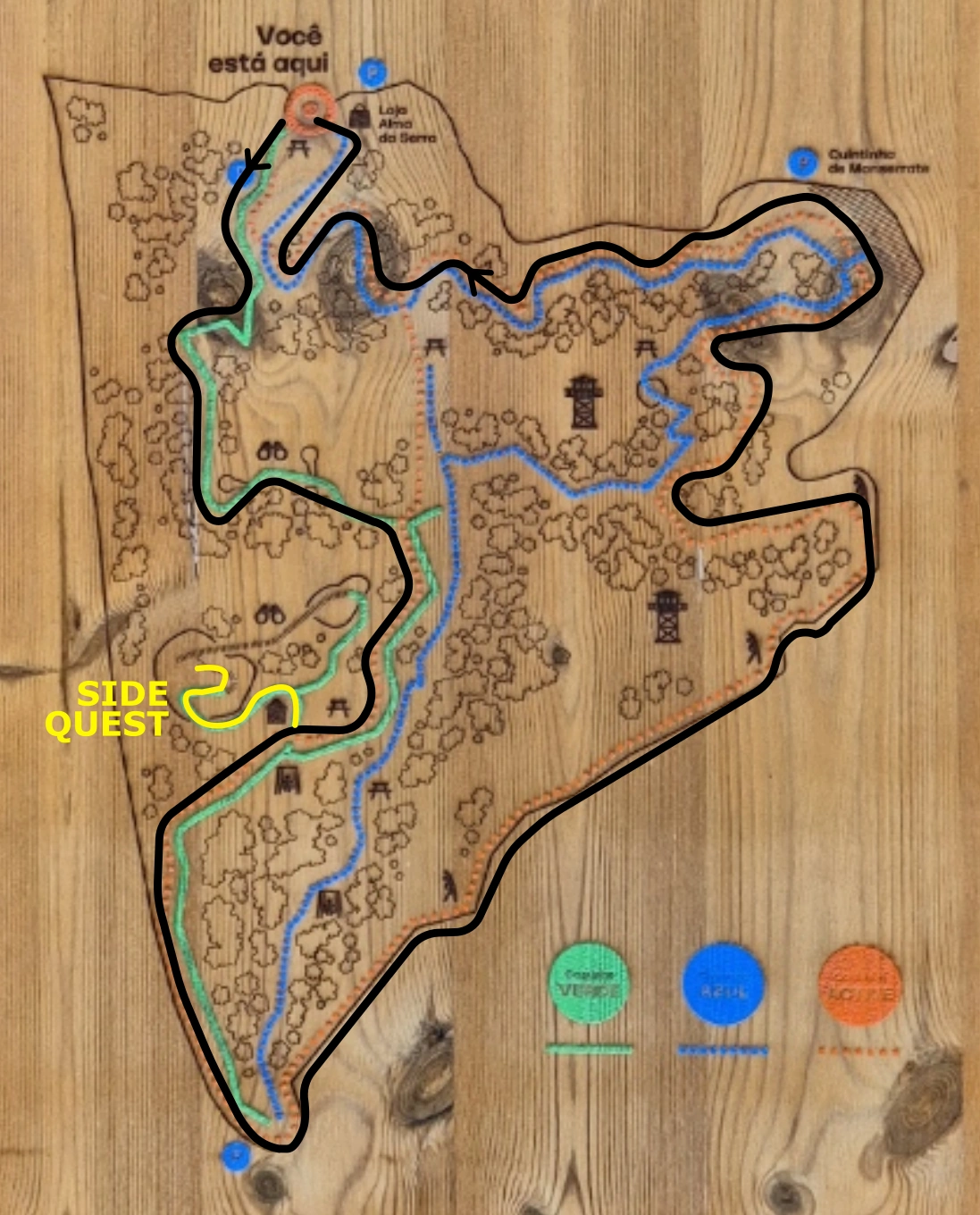
My original plan was to follow the orange route from beginning to end.
Instead, I followed a mixture of the three.
At one point, I decided to take a little side quest.
Side quest
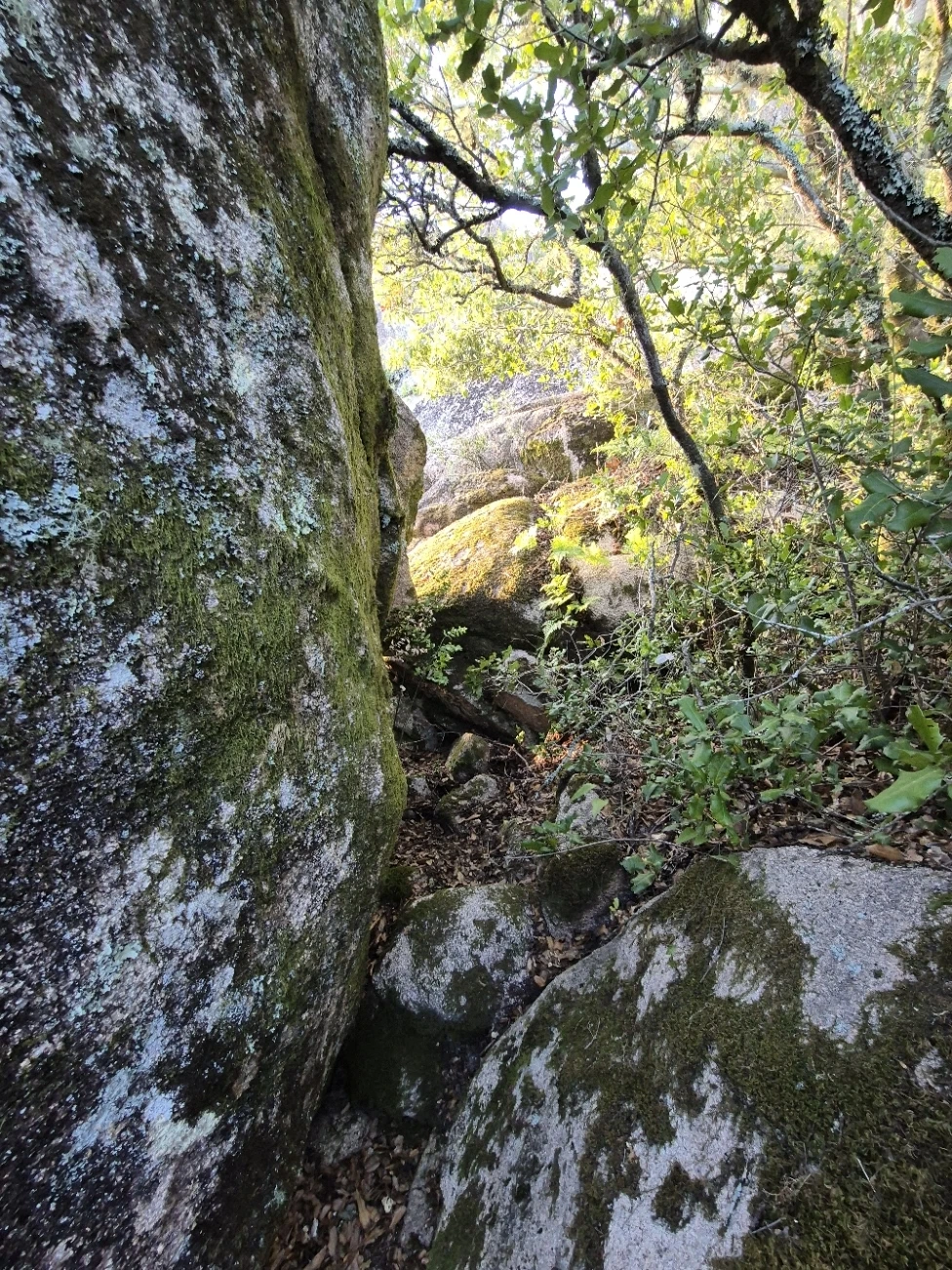
There are two prominent rocky hills visible from the trail. Naturally, I couldn’t resist climbing them.
And it was so much fun!
I later discovered that there’s a relatively easy way up (although easy might be stretching it a little). My approach, on the other hand, involved a fair amount of scrambling, jumping and climbing over rocks.
Luckily, the weather was dry, which made things easier.
Note: If you decide to take on this little side quest, be careful and watch your footing. There is a rough path up, but it’s clearly not well-used and involves some scrambling over rocks. Stick to the existing path, avoid disturbing the vegetation or dislodging rocks, and take your time.
Most importantly, have fun! The view from the top is absolutely worth it.
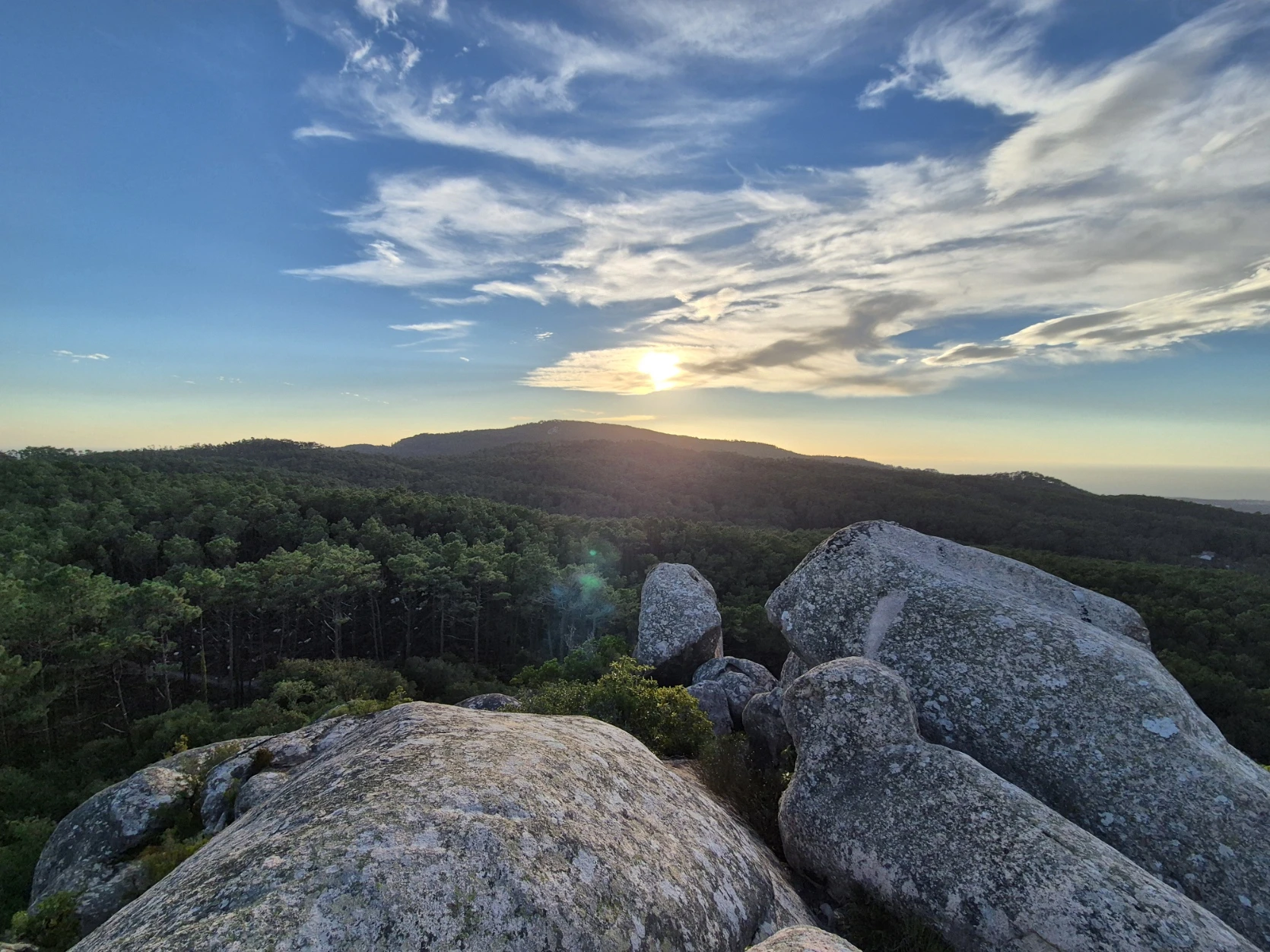
This was probably my favourite part of the afternoon.
There is something particularly enjoyable about exploring a place without trying to optimise the experience. No list of ten things to see. No rush to get to the next viewpoint. No pressure to finish the route exactly as planned.
Just: That path looks interesting. Let’s see where it goes.
Maybe this is one of the reasons I enjoyed Tapada de Monserrate so much.
It reminded me that exploring somewhere close to home can still feel like travelling.
Then my phone died
And this is where the relaxing Sunday walk became a proper adventure.
My phone battery died.
It was already getting dark.
I was still somewhere inside the Tapada.
So I did what seemed like the only option: I continued navigating the park in complete darkness.
Eventually, I found a secondary exit and made my way out.
Unfortunately, I had managed to exit in the opposite direction from the car park.
At this point, my quiet afternoon in nature had officially become a small expedition.
I started walking, at given point I started suspecting that I was going the wrong way. Eventually, I had to flag down a passing car and ask some strangers for directions. It was already dark, and I was on a road surrounded by dense forest..
Somehow, it all worked out.
And, looking back, it is probably the story I’ll remember most from the day.
A different way to experience Sintra
There is a particular kind of luxury in discovering that you don’t need to go very far to feel somewhere else.
Tapada de Monserrate is only a short distance from some of Sintra’s most visited attractions, yet walking through it can feel completely different.
There are no palaces to tick off your list. No need to rush from one attraction to another. You can simply spend a few hours outside, walking through the landscape and seeing where you end up.
For me, that is also what makes experiences like this interesting from a more sustainable lifestyle perspective.
The best day out doesn’t always require a car journey across the country, a flight or a packed itinerary. Sometimes, it is the place you’ve been overlooking all along.
A Sunday afternoon.
A forest.
A pair of walking shoes.
And, ideally, a fully charged phone.
As for me, I don’t think this will be my last adventure in Tapada de Monserrate. There are still trails to explore, paths to discover and, hopefully, a few less unexpected detours. We’ll be back for more adventures — and we’ll let you know what we find along the way.
Before you go
If you’re planning to visit Tapada de Monserrate, check the current trail and access information before setting off, as routes and access arrangements can change.
And based on my experience, I would add a few personal recommendations:
Take a photo of the map at the entrance.
The route markers are discreet, so having the map on your phone can make a big difference.
Wear proper shoes.
This is a walk through a forest, not a stroll along a pavement.
Bring water.
You’ll thank yourself later.
Charge your phone.
Seriously.
And if you have a power bank, bring it.
Most importantly, leave some room for the unexpected.
You might not follow the route you planned.
You might discover a path you weren’t looking for.
You might even get slightly lost.
And that might turn out to be the best part.
Note: trail layouts, markings, opening hours and access conditions can change. Check the official Parques de Sintra information before your visit.
Leave no trace: a short guide for Tapada de Monserrate
The Tapada is a quiet place, and the best way to keep it that way is to leave it exactly as you found it. Seven small habits go a long way.
1. Plan ahead.
Check the current access information from Parques de Sintra. This park is, by default, alwyas open, but weather conditions like very strong winds or high fire risk might restrict its usage. Save the trail map as suggested
2. Stay on the paths.
Shortcuts and detours cause erosion and trample the vegetation. If you do climb the rocky hills, choose spots that are already worn, watch your footing and don’t damage the vegetation or the rocks.
3. Take your rubbish with you.
Orange peels, tissues, wrappers and cigarette butts included. There are no bins in the middle of the forest, so bring a small bag and carry everything back out.
4. Leave what you find.
Don’t pick flowers, don’t take stones or pine cones, and don’t touch old stone structures. This landscape has been shaped over centuries, and it’s part of a UNESCO World Heritage Site.
5. Respect the fire risk.
No fires, no barbecues, no cigarettes. The Sintra hills are very dry in summer, and a single spark is enough.
6. Respect wildlife.
Keep your distance, don’t feed animals and keep noise to a minimum.
7. Be kind to other visitors.
Keep music in your headphones, give way on narrow paths and enjoy the silence. It’s what makes the Tapada special